
Anna Seim: Capacity development across central banks – an outlook from the Riksbank
Presentation On Wednesday, Deputy Governor Anna Seim participated in a seminar for SIDA staff at the Stockholm office and Sweden's embassies abroad. She spoke about the importance of institutions for financial and economic stability and development, and gave examples of how the Riksbank helps to strengthen the capacity of central banks in developing countries through so-called technical assistance.
Date: 11/02/2026 10:00
Speaker: Deputy Governor Anna Seim
Place: SIDA
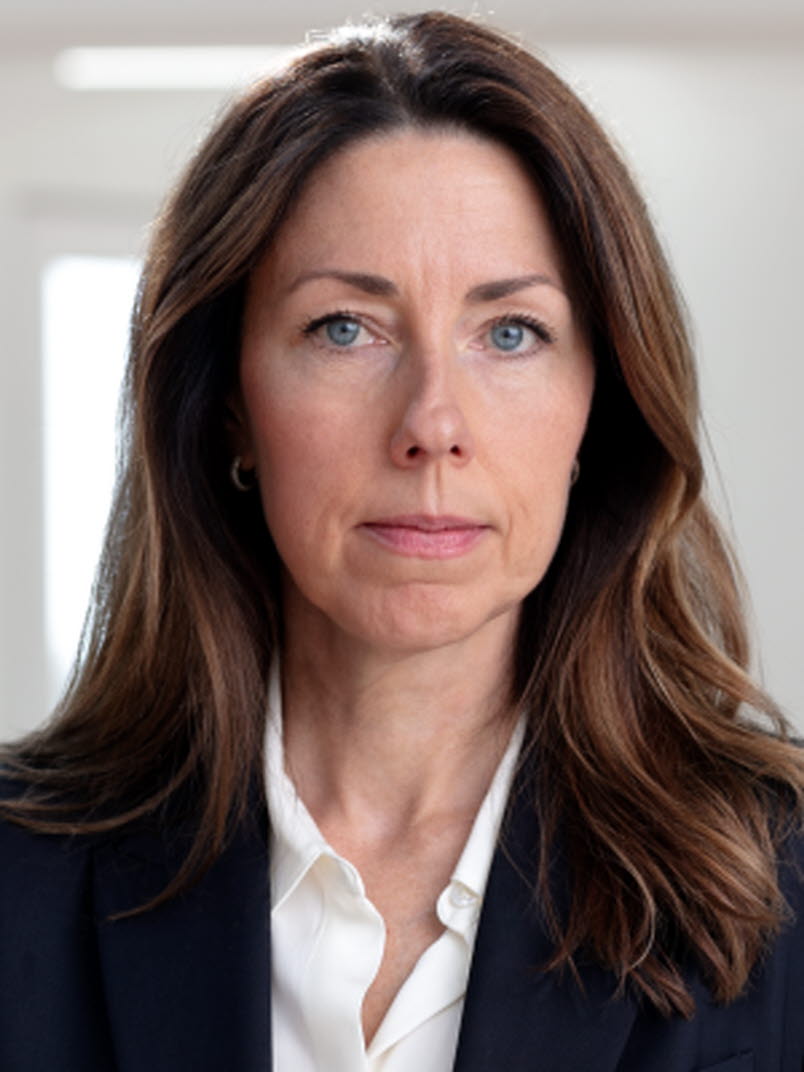
Anna Seim, deputy governor.
In her speech, Ms Seim emphasised that well-functioning institutions are a necessary condition for economic growth. As an example, she highlighted how an independent central bank, such as the Riksbank, can pave the way for stable and sustainable economic development. By maintaining low and stable inflation, monitoring financial stability and ensuring that the general public can make payments, the central bank creates favourable conditions for investment in human and real capital, and thereby long-term economic development..
Although all central banks have the same basic mission, their circumstances differ. Through technical assistance, the Riksbank can help other central banks to develop their capacity.
The Riksbank has chosen a path of transparency. Being one of the world's most independent central banks makes high demands of us. “Transparency facilitates scrutiny of our activities. But open and clear communication can also make monetary policy more effective,” said Ms Seim.
She pointed out that in several countries where SIDA operates, central banks may face different challenges than we do in Sweden, such as a lack of basic frameworks and regulations, undeveloped financial markets or shortcomings in the necessary infrastructure. The central banks may also lack analytical skills or be hampered by having too many missions and objectives.
“Supporting central banks in other countries can have a major positive impact on their long-term stability and development,” said Ms Seim. This becomes particularly clear as global aid funding declines and long-term economic development increasingly relies on the possibility to attract funding and capital from private actors.
“We receive requests for cooperation with central banks in other countries regarding areas such as electronic payments and systems, monetary policy communication under inflation targeting, the design of monetary policy frameworks and financial stability monitoring,” Ms Seim explained.
The Riksbank has been providing technical assistance to other central banks for 25 years, and since 2002 these activities have been financed through a special agreement with SIDA. The aim is precisely to support central banks to develop as institutions, so that in the longer term they can contribute to economic stability and development in their country.
The Riksbank cooperates with a small number of central banks at a time. Currently, the Riksbank has ongoing projects with the central banks of Ethiopia, Rwanda and Ukraine and is also working with the Palestinian Monetary Authority.
The work on technical assistance has often had a positive impact in the partner countries and has helped to strengthen the Riksbank’s reputation and influence in international contexts. For example, the cooperation with the Palestinian Monetary Authority, in key areas such as electronic payments and financial stability, has led to the Riksbank being asked to participate in international evaluations. In Rwanda, the Riksbank has helped to develop models to enable the central bank to make informed monetary policy decisions and has organised seminars on financial crisis management and exercises to strengthen crisis preparedness.
Ms Seim pointed out that the relationship with Ukraine is unique. Despite the Russian war of aggression, the Riksbank and the Central Bank of Ukraine have maintained close contact. In December 2023, the Governor of the Riksbank visited the National Bank of Ukraine (NBU) in Kyiv and in June 2024, the Riksbank welcomed the Governor of the National Bank of Ukraine to Stockholm. Over the years, the banks have exchanged knowledge in areas such as monetary policy, financial stability, payments, internal auditing and communication. Cooperation with the Ukrainian central bank has led to a mutual exchange of knowledge, mainly in the area of preparedness.
“Our cooperation with the NBU is an example of how we do not act as consultants in the technical assistance – we gain colleagues in other countries and often develop a mutually beneficial cooperation,” concluded Ms Seim.