
500-krona banknote
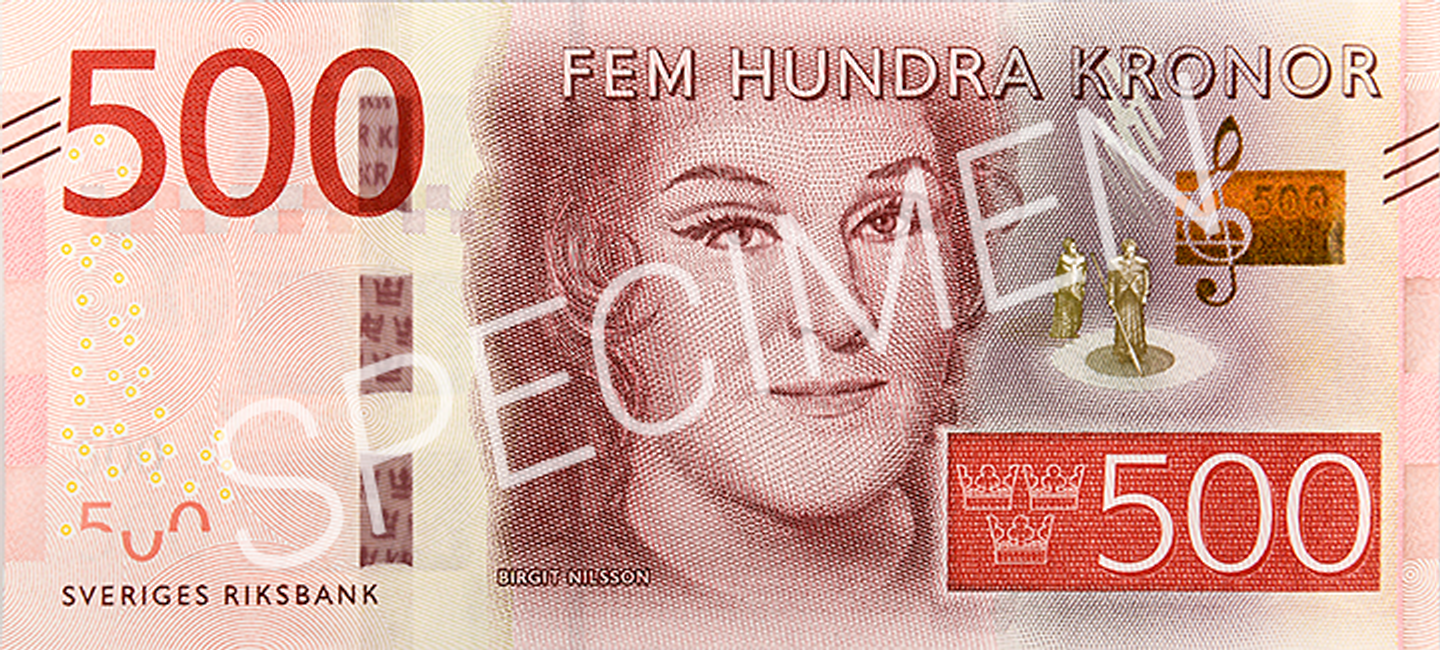
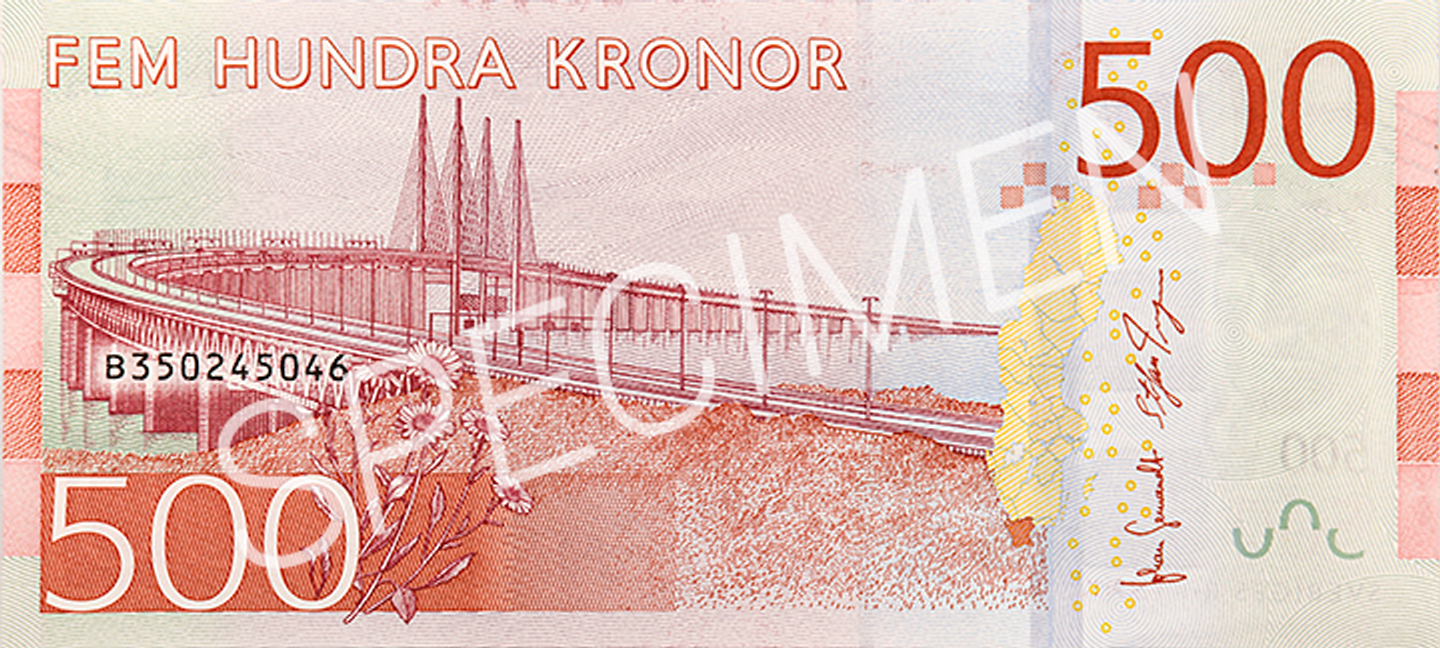





1. Security strip
Vertical red security strip with three windows. The windows feature images that move and alternate motif between KR and a royal crown when you tilt the banknote. The placement of the security strip may vary by up to 2 cm.

2. Colour-shifting image
Colour-shifting image linked to the person portrayed on the banknote, in this case a G-clef. The banknote's denomination, 500, is also shown in the image. The image and the denomination gradually change colour between gold and green when you tilt the banknote.
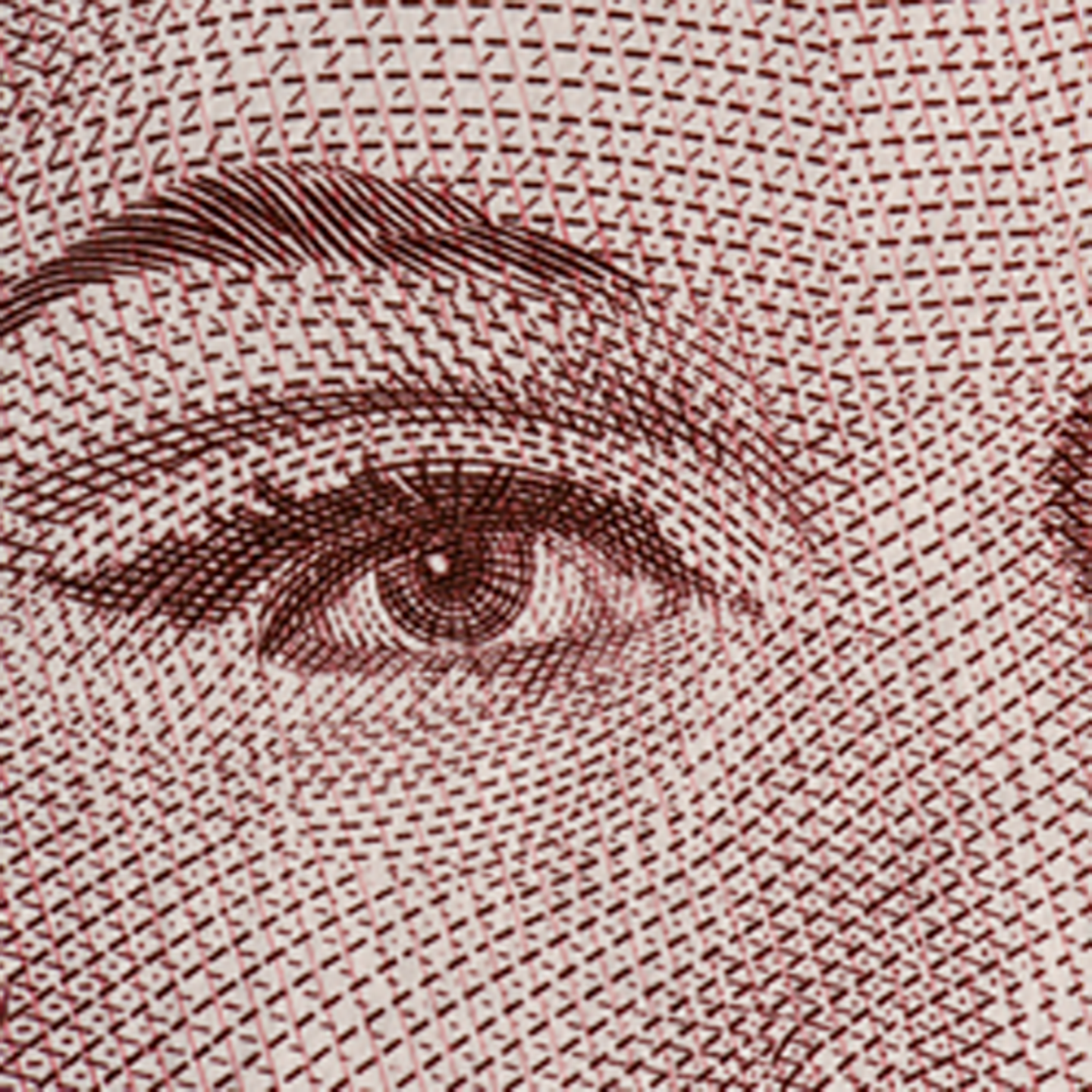
3. Intaglio print
Intaglio print, which makes the paper feel like a banknote and gives it a noticeable raised surface. Run your thumb over it or scrape lightly with a fingernail. Intaglio printing has been used for the portrait, denominations, the text SVERIGESRIKSBANK and the markings identifying the denomination.

3.1 Intaglio print

4. Watermark
Watermark with the banknote's denomination and portrait that are visible when you hold the banknote to the light. The denomination appears significantly lighter than the rest of the paper.

5. Security thread
Security thread embedded in the banknote paper. Visible as a dark line when you hold the banknote up to the light.
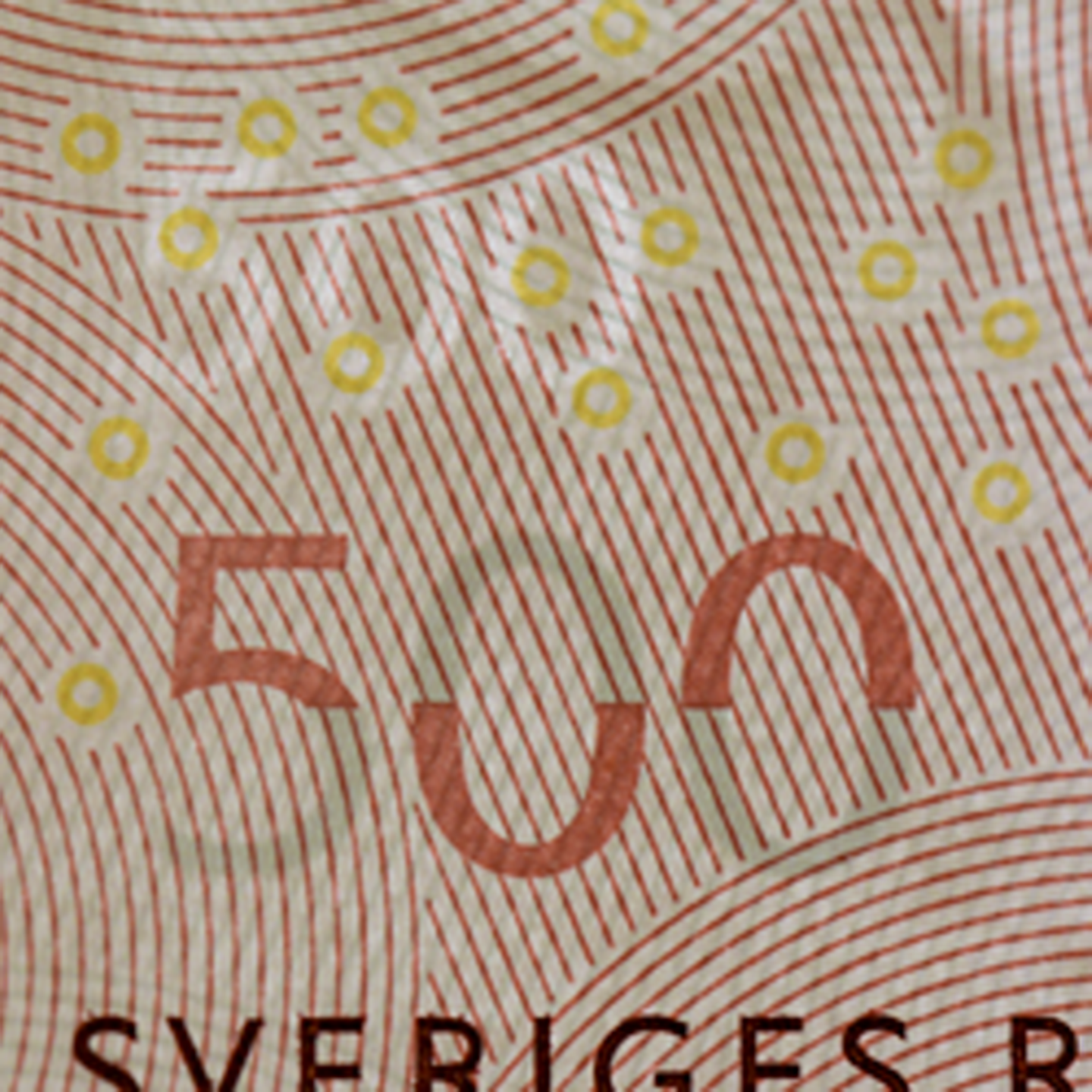
6. See-through picture
A pattern that, together with a matching pattern on the reverse, forms the denomination when you hold the banknote to the light.

7. UV image
UV image (three crowns) that fluoresces (glows) yellow and blue under ultraviolet light.
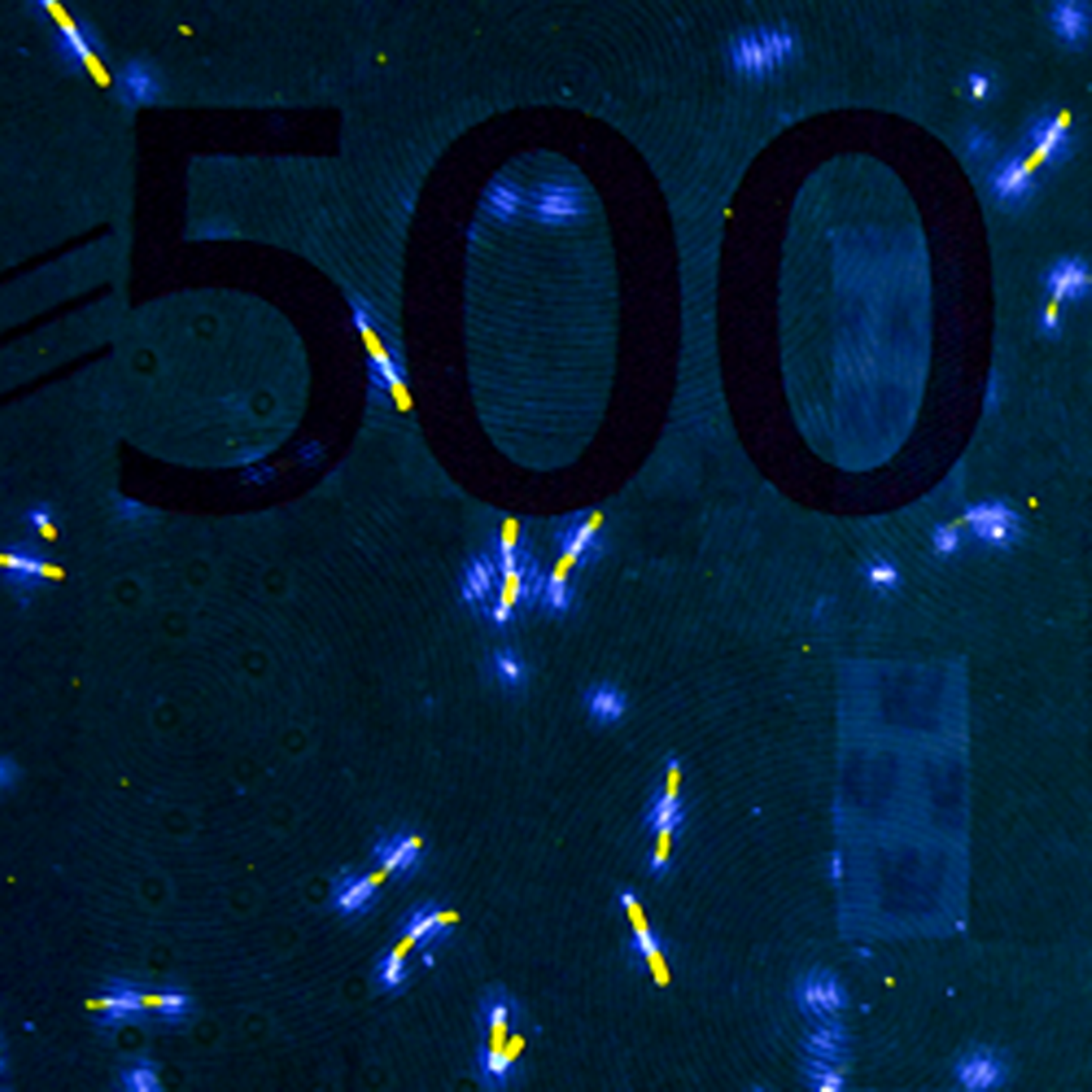
8. UV fibres
UV fibres spread across the entire banknote that fluoresce (glow) yellow and blue under ultraviolet light.

9. Micro- and minitexts
Text in Birgit Nilsson’s hair (her opera roles, in translation: Agathe, Aida, Amelia, Ariadne, Brünnhilde, Donna Anna, Elektra, Elettra, Elisabeth, Elsa, the Marschallin, the Dyer's Wife, Isolde, Judith, Lady Macbeth, Leonore, Lisa, Minnie, Ortlinde, Penelope, Rezia, Salome, Senta, Sieglinde, Sigrun, Tosca, Turandot, Ursula, Venus, Woglinde), written with no spaces or punctuation: AGATHEAIDAAMELIAARIADNEBRÜNNHILDEDONNAANNA ELEKTRAELETTRAELISABETHELSAFÄLTMARSKALKINNAN FÄRGARFRUNISOLDEJUDITHLADYMACBETHLEONORELISA MINNIEORTLINDEPENELOPEREZIASALOMESENTASIEGLINDE SIGRUNTOSCATURANDOTURSULAVENUSWOGLINDE

9.2 Micro- and minitexts
Text by the denomination on the right side, repeated several times: SVERIGESRIKSBANK SVERIGESRIKSBANK SVERIGESRIKSBANK Text on the short edge, repeated several times: SVERIGESRIKSBANK SVERIGESRIKSBANK SVERIGESRIKSBANK
1. Watermark
Watermark with the banknote's denomination and portrait that are visible when you hold the banknote to the light. The denomination appears significantly lighter than the rest of the paper.
2. Security thread
Security thread embedded in the banknote paper. Visible as a dark line when you hold the banknote up to the light.
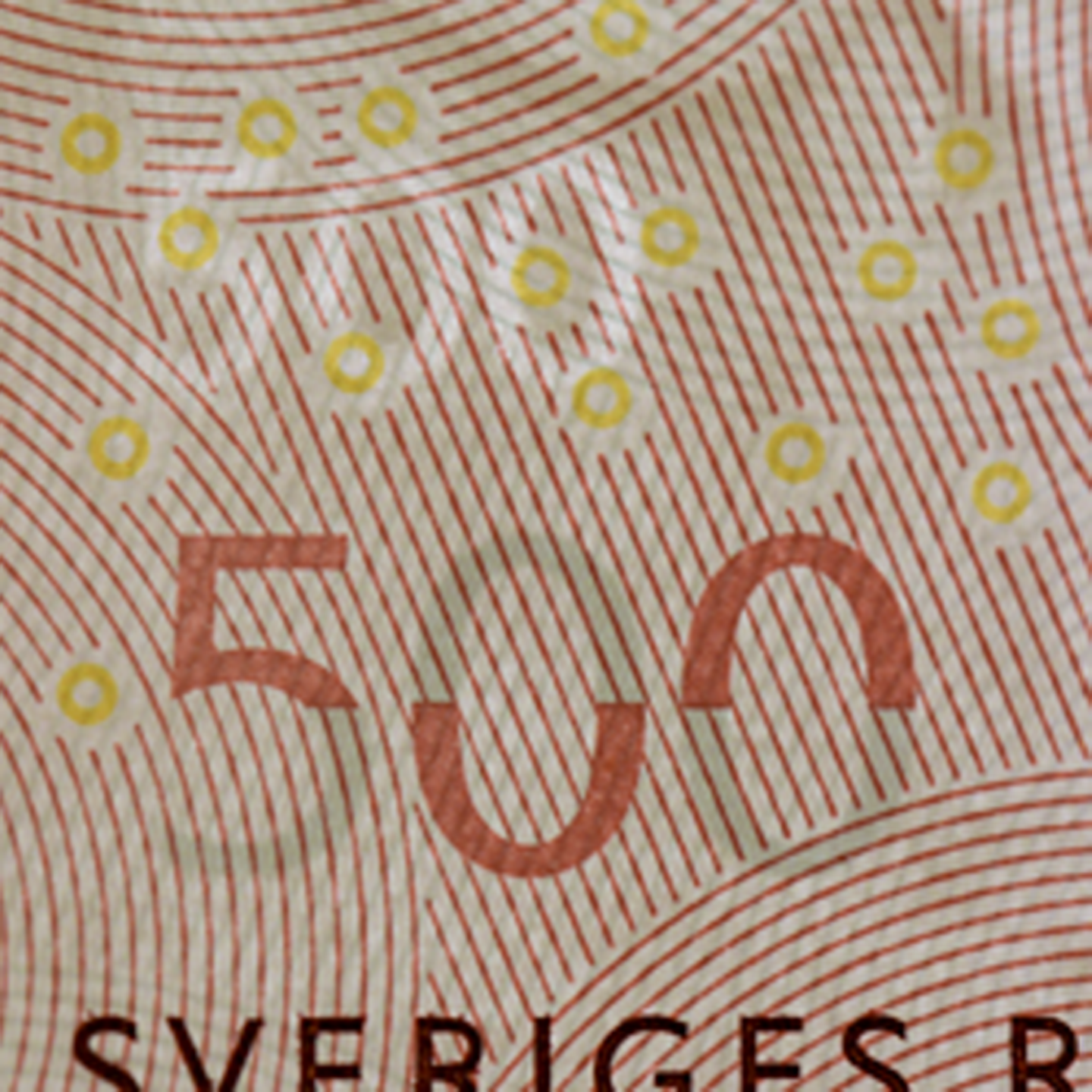
3. See-through picture
A pattern that, together with a matching pattern on the obverse, forms the denomination when you hold the banknote to the light.

4. UV image
UV image (500) that fluoresces (glows) green under ultraviolet light.
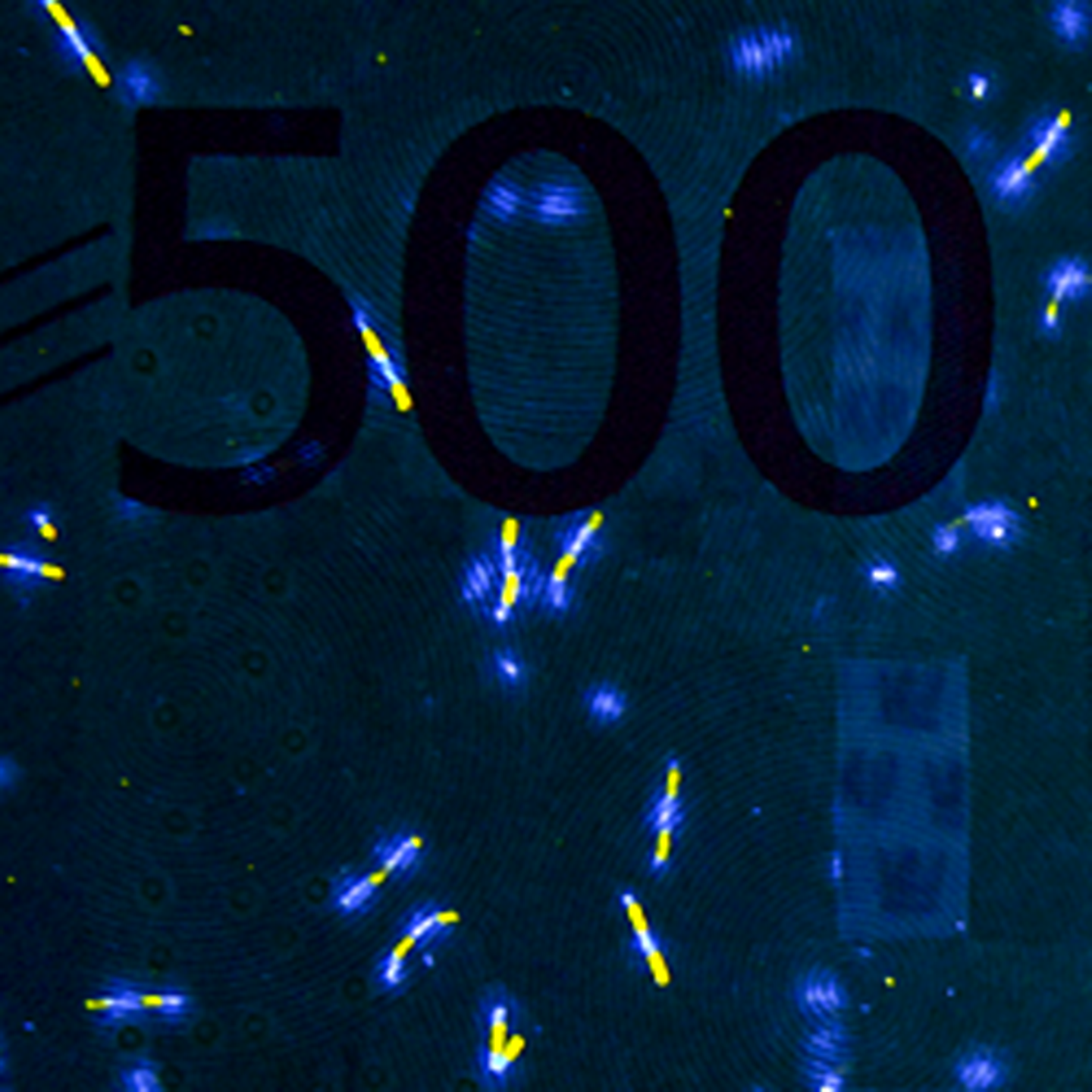
5. UV fibres
UV fibres spread across the entire banknote that fluoresce (glow) yellow and blue under ultraviolet light.
6. Minitexts
Text by the map, repeated several times: SVERIGESRIKSBANK SVERIGESRIKSBANK SVERIGESRIKSBANK Text on the short edge, repeated several times: SVERIGESRIKSBANK SVERIGESRIKSBANK SVERIGESRIKSBANK
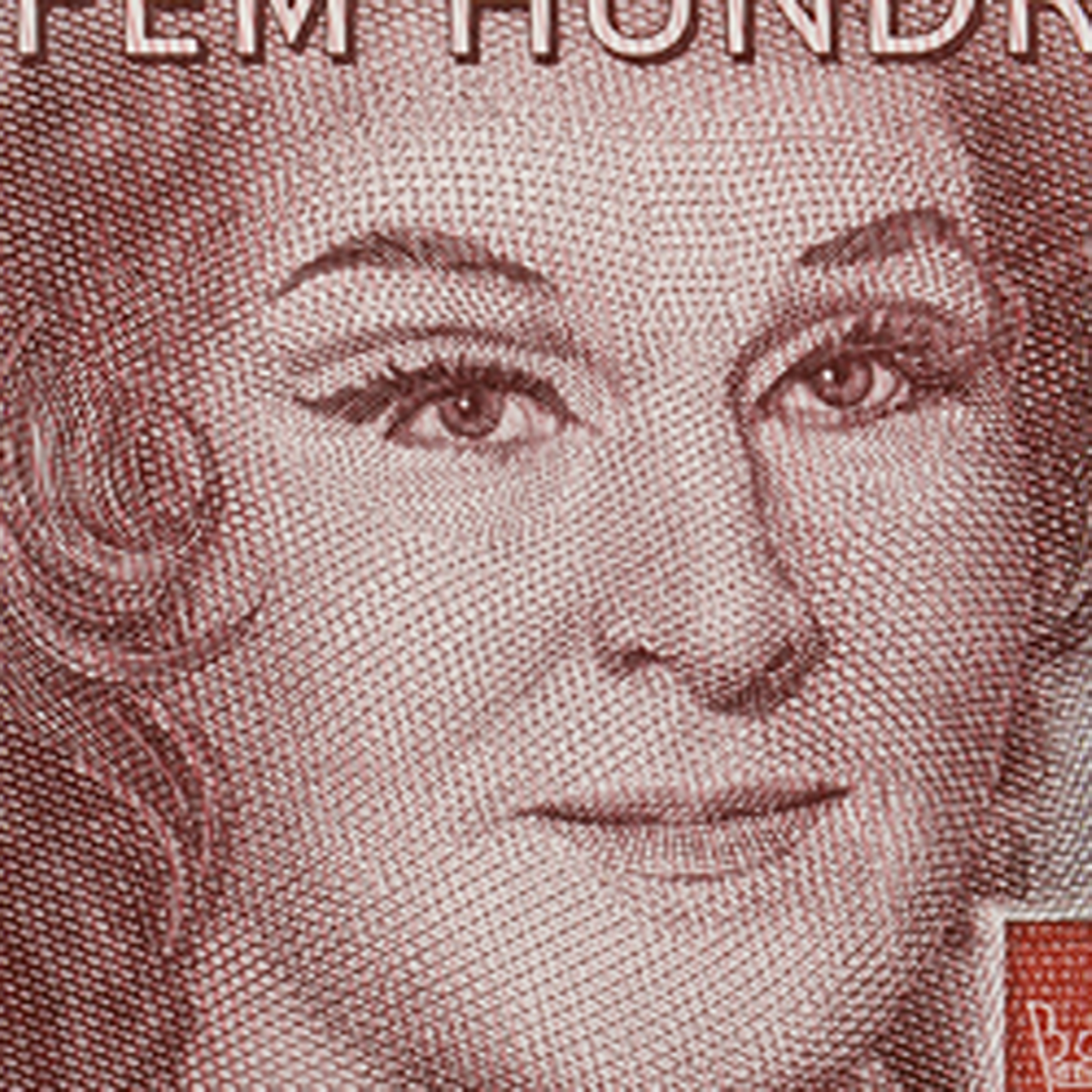
1. Birgit Nilsson
Opera singer Birgit Nilsson (1918–2005) is considered the leading Wagnerian soprano of her day with a successful career that spanned the world. Portrait engraved after a photograph by Enar Merkel Rydberg which shows Birgit Nilsson in the role of Brünnhilde, taken in conjunction with a 1968 production of Richard Wagner's opera Die Walküre.

2. Brünnhilde in Die Walküre
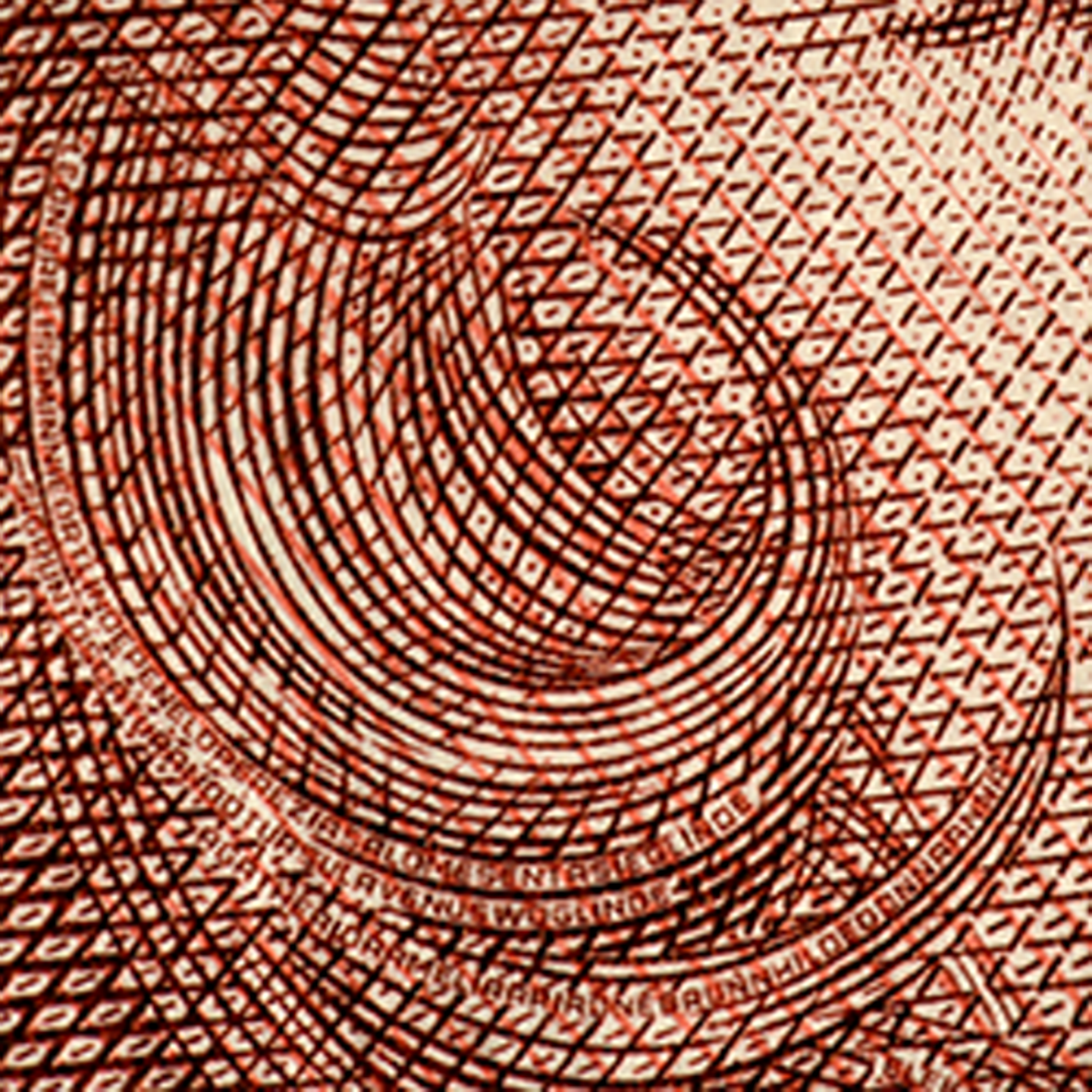
3.Birgit Nilsson's opera roles
Minitext that can be read with the aid of a magnifying glass (in translation: Agathe, Aida, Amelia, Ariadne, Brünnhilde, Donna Anna, Elektra, Elettra, Elisabeth, Elsa, the Marschallin, the Dyer's Wife, Isolde, Judith, Lady Macbeth, Leonore, Lisa, Minnie, Ortlinde, Penelope, Rezia, Salome, Senta, Sieglinde, Sigrun, Tosca, Turandot, Ursula, Venus, Woglinde): Agathe, Aida, Amelia, Ariadne, Brünnhilde, Donna Anna, Elektra, Elettra, Elisabeth, Elsa, Fältmarskalkinnan, Färgarfrun, Isolde, Judith, Lady Macbeth, Leonore, Lisa, Minnie, Ortlinde, Penelope, Rezia, Salome, Senta, Sieglinde, Sigrun, Tosca, Turandot, Ursula, Venus, Woglinde.
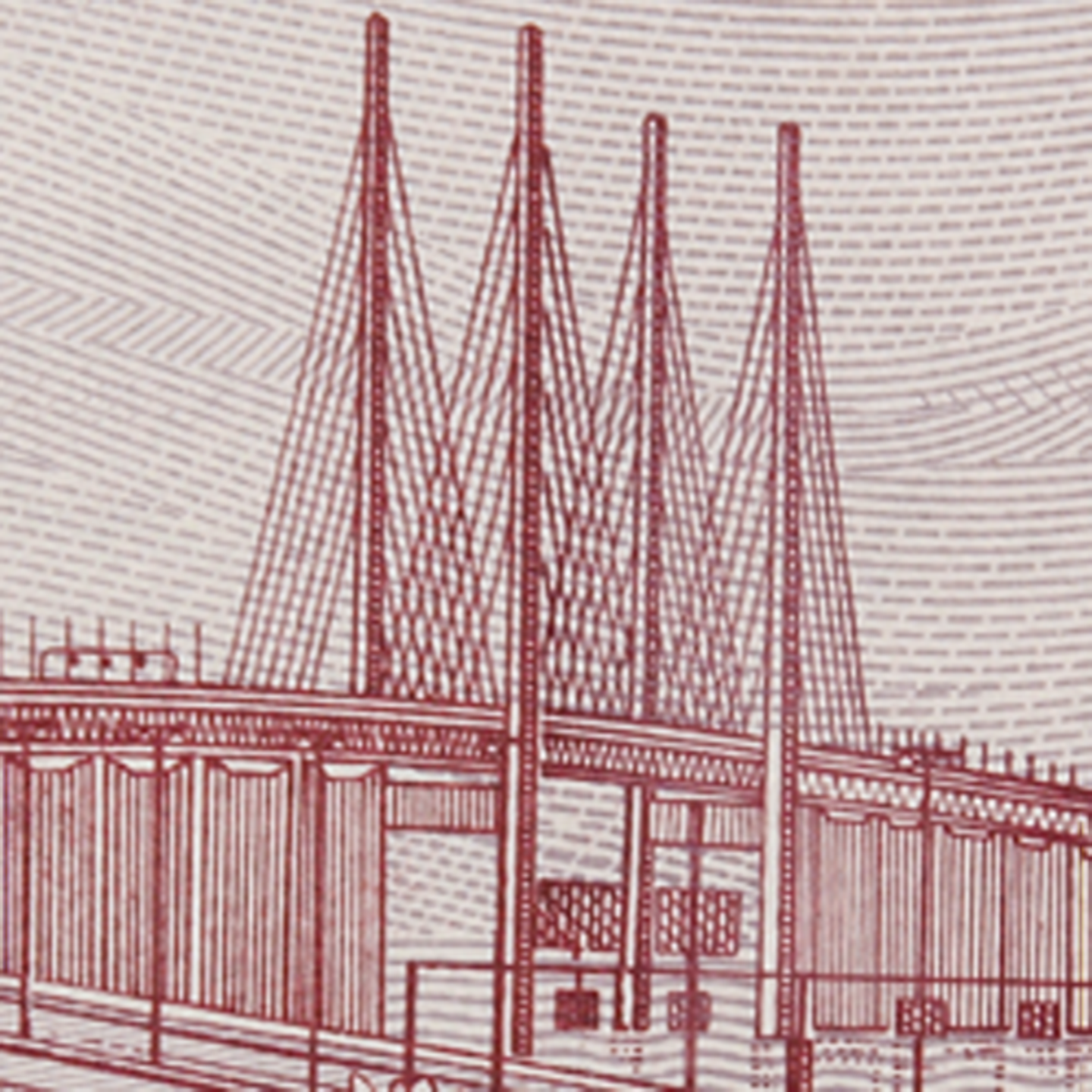
1. The Öresund Bridge
The Öresund Bridge, the 15.9 km long link between Malmö and Copenhagen that opened on 1 July 2000.
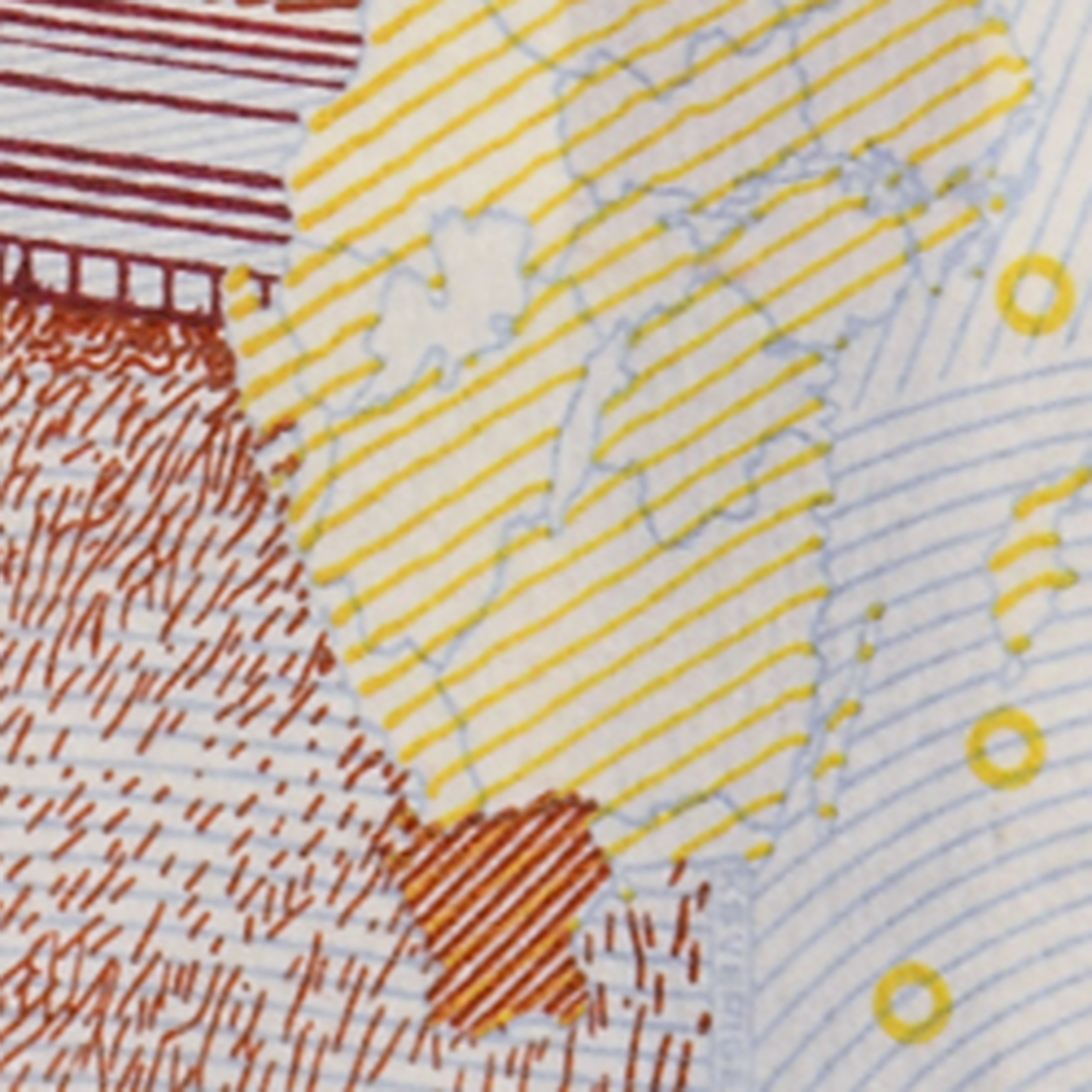
2. Birgit Nilsson’s Skåne
Map of Sweden with the province of Skåne marked, where Birgit Nilsson grew up on a farm on the peninsula of Bjäre.

3. Ox-eye daisy
The provincial flower of Skåne, the ox-eye daisy.
Facts 500-krona banknote
Motif obverse: Birgit Nilsson, singer
Motif reverse: Skåne, where Birgit Nilsson grew up
Measures: 147 x 66 millimetres
Thickness: 125 micrometres +/- 10%
Colour: Red
Will be introduced: 2016
Banknote paper: Manufactured of cotton fibres that are not fluorescent, which is to say they do not emit any light under ultraviolet light (other types of paper may emit a bluish glow).
Banknote numbers: The letters indicate the year in which the banknote was printed. A = 2013, B = 2014 etc. The two first digits indicate where on the printing sheet the banknote was printed. The final seven digits are a serial number.
Valid from 3 October 2016.