
200-krona banknote
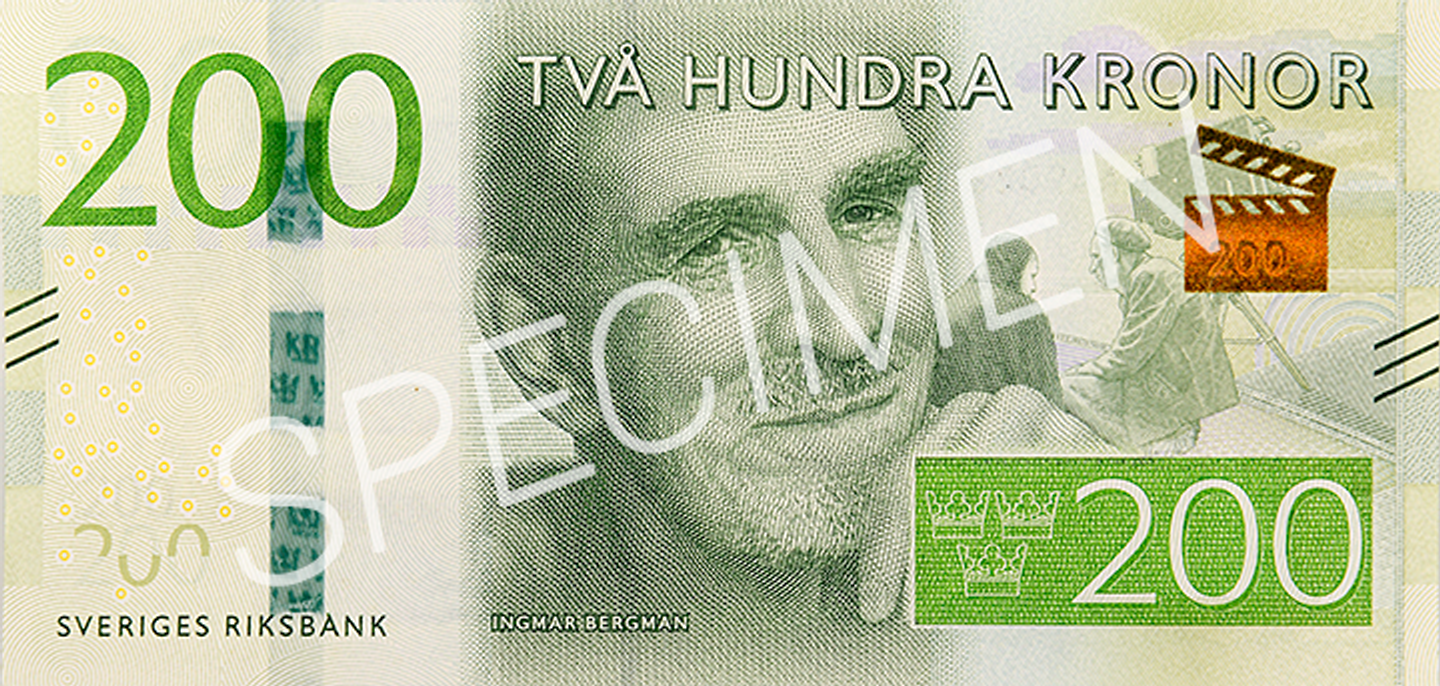
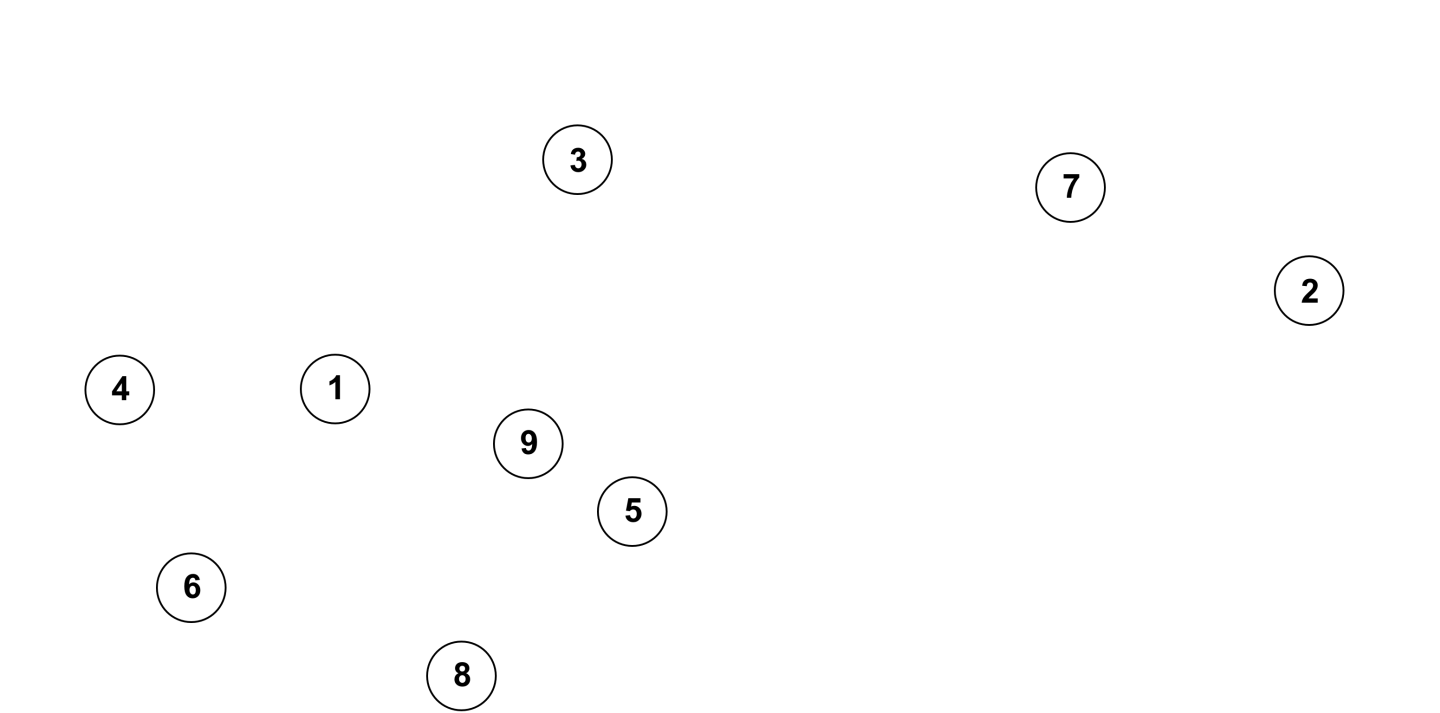

1. Security strip
Vertical green security strip with three windows. The windows feature images that move and alternate motif between KR and a royal crown when you tilt the banknote. The placement of the security strip may vary by up to 2 cm.
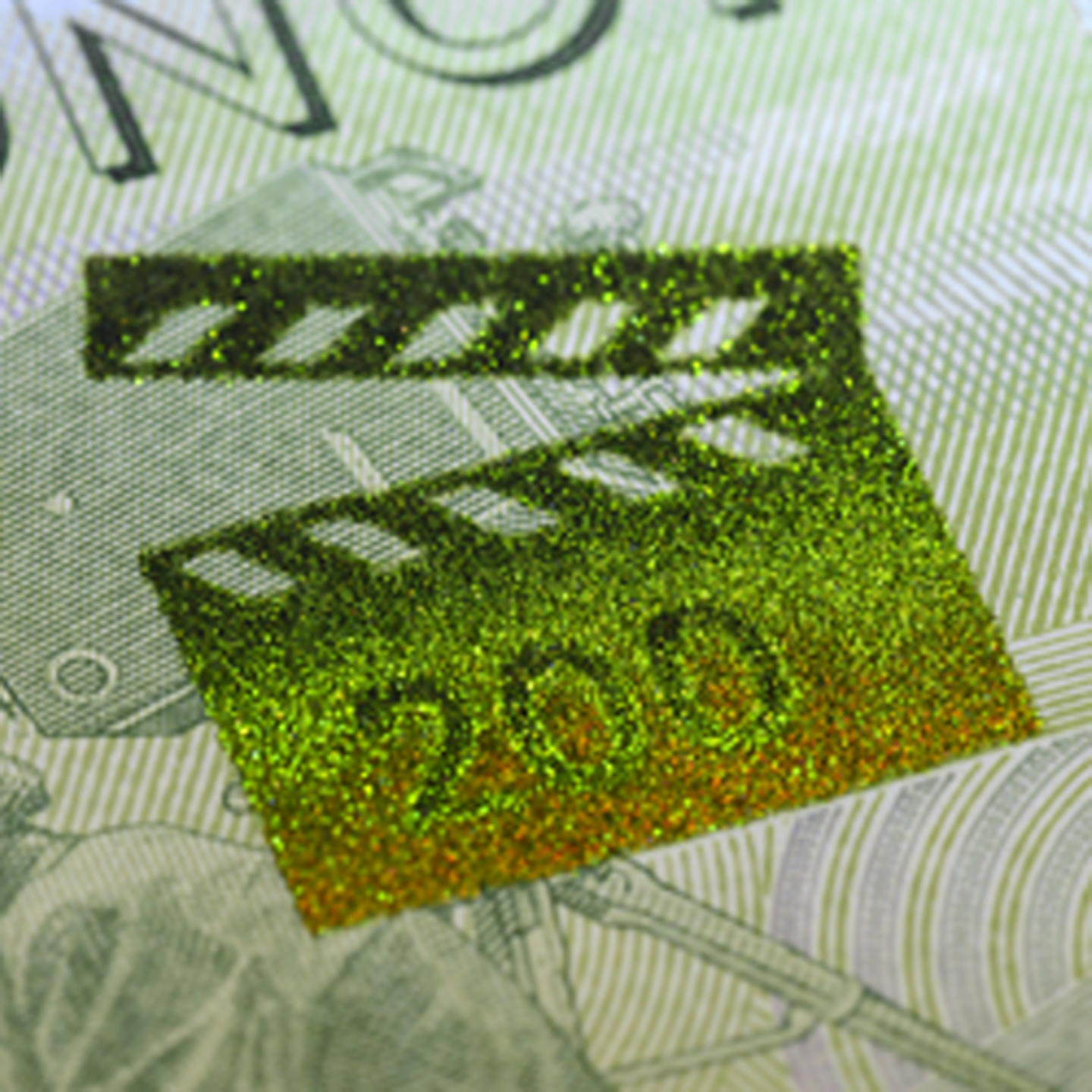
2. Colour-shifting image
Colour-shifting image linked to the person portrayed on the banknote, in this case a clapperboard. The banknote's denomination, 200, is also shown in the image. The image and the denomination gradually change colour between gold and green when you tilt the banknote.
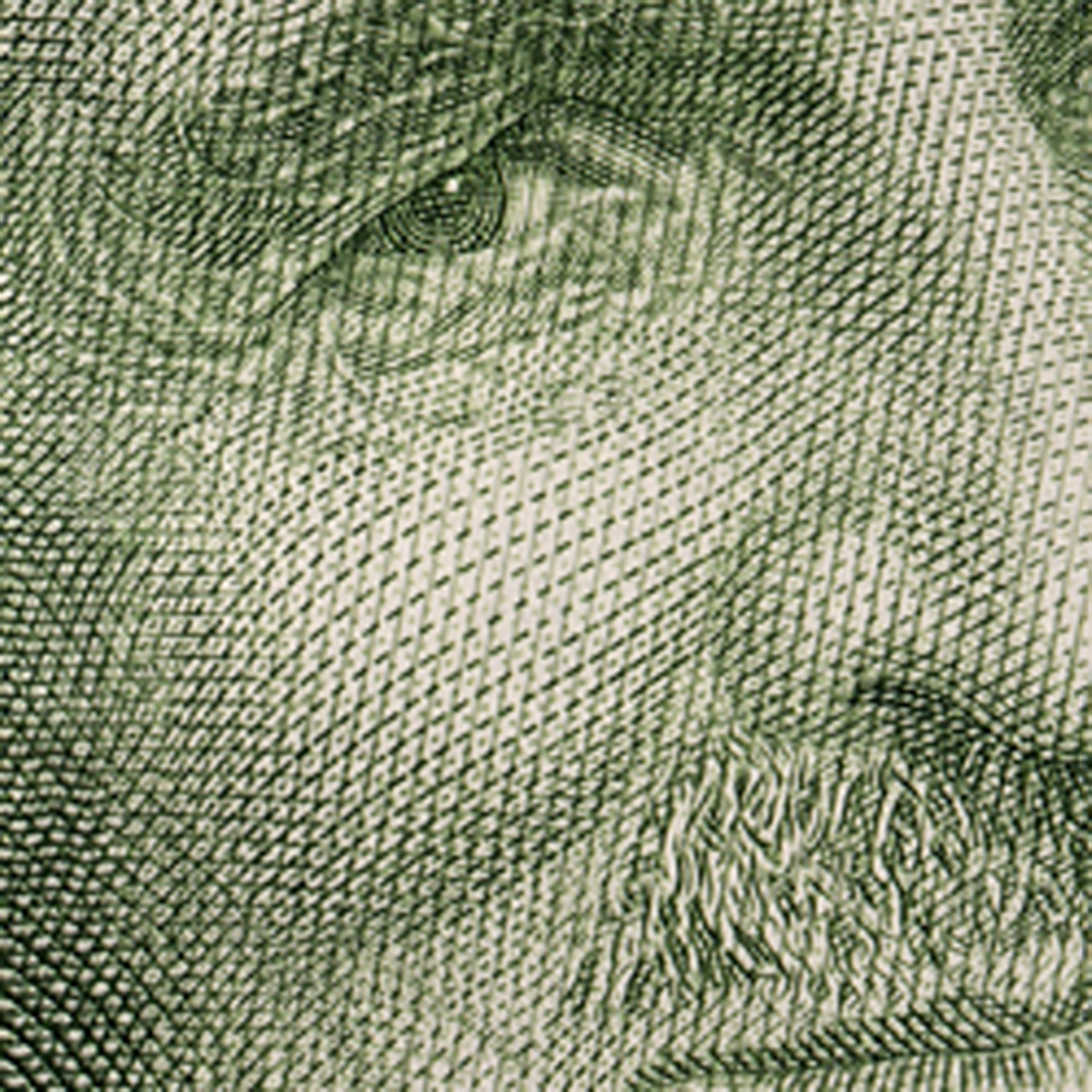
3. Intaglio print
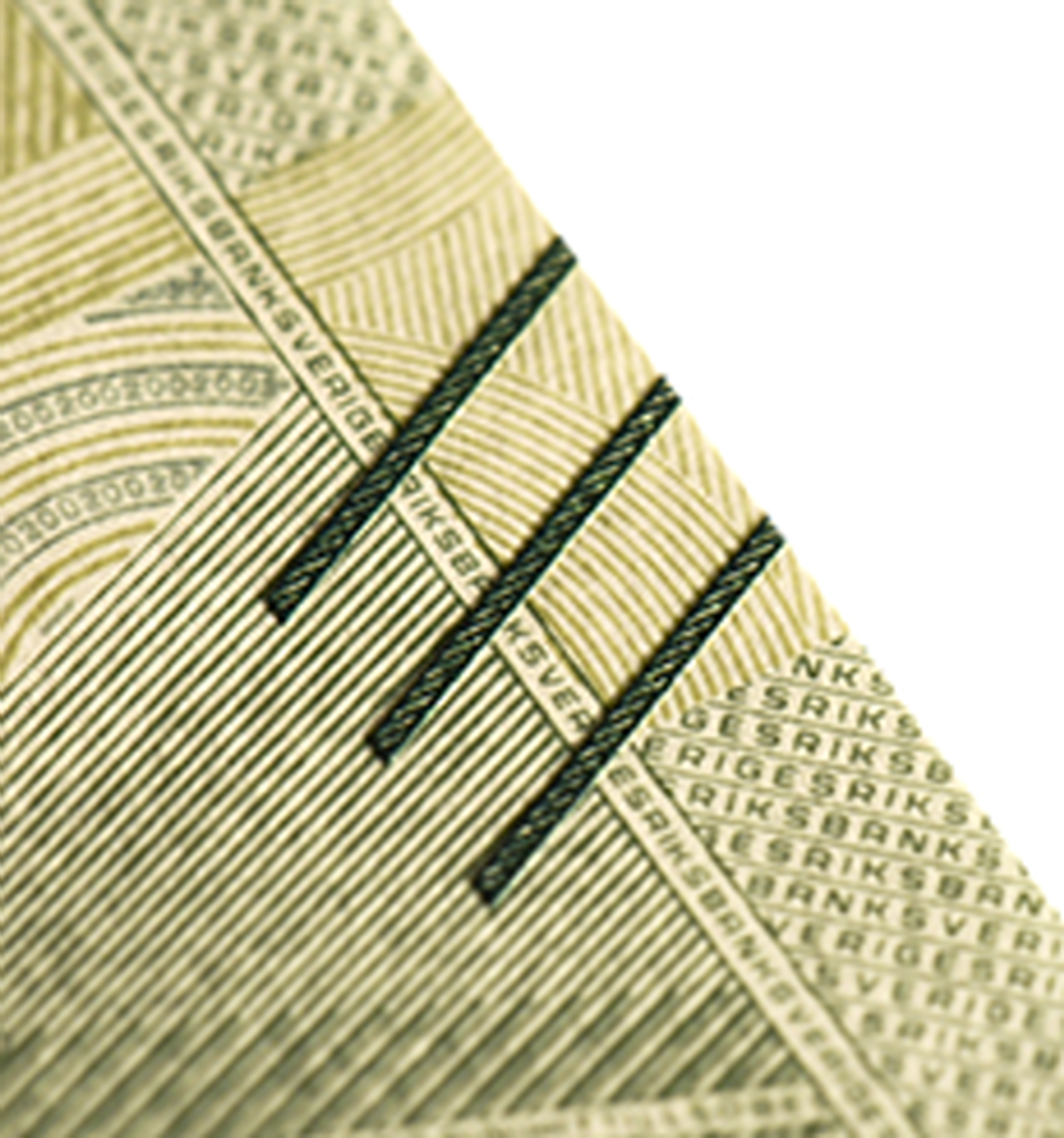
Intaglio print, which makes the paper feel like a banknote and gives it a noticeable raised surface. Run your thumb over it or scrape lightly with a fingernail. Intaglio printing has been used for the portrait, denominations, the text SVERIGESRIKSBANK and the markings identifying the denomination.
3.2 Intaglio print
4. Watermark
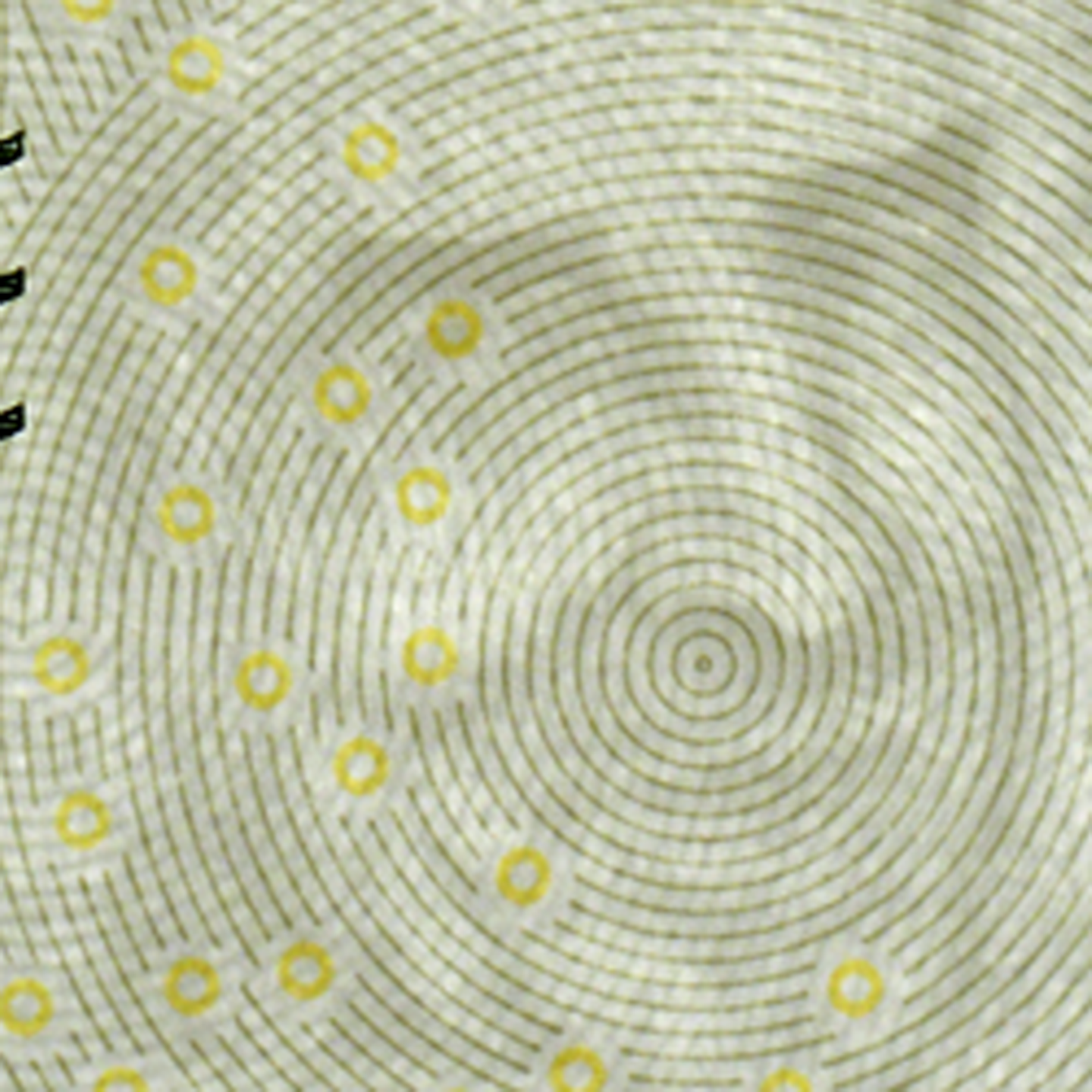
Watermark with the banknote's denomination and portrait that are visible when you hold the banknote to the light. The denomination appears significantly lighter than the rest of the paper.
5. Security thread
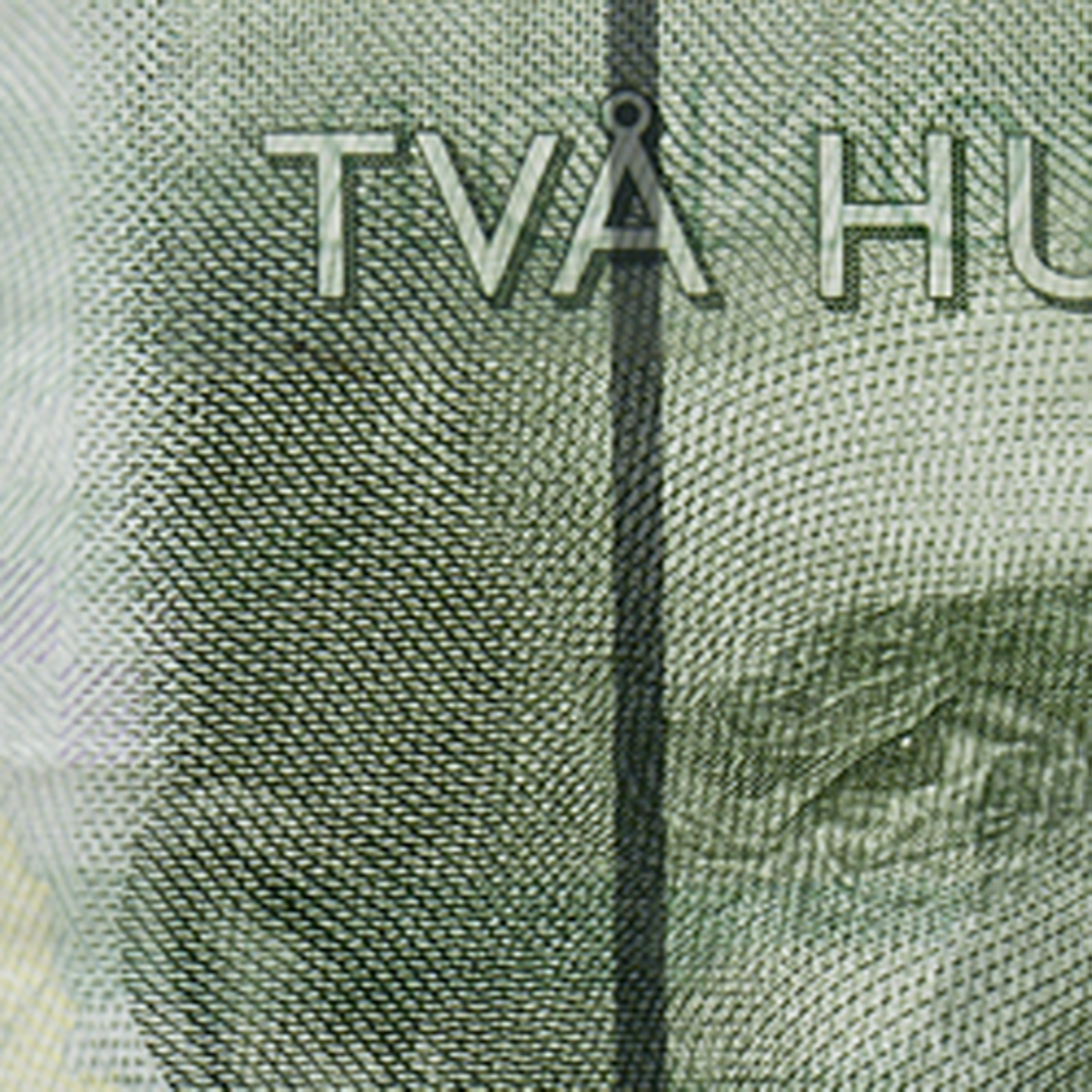
Security thread embedded in the banknote paper. Visible as a dark line when you hold the banknote up to the light.
6. See-through picture
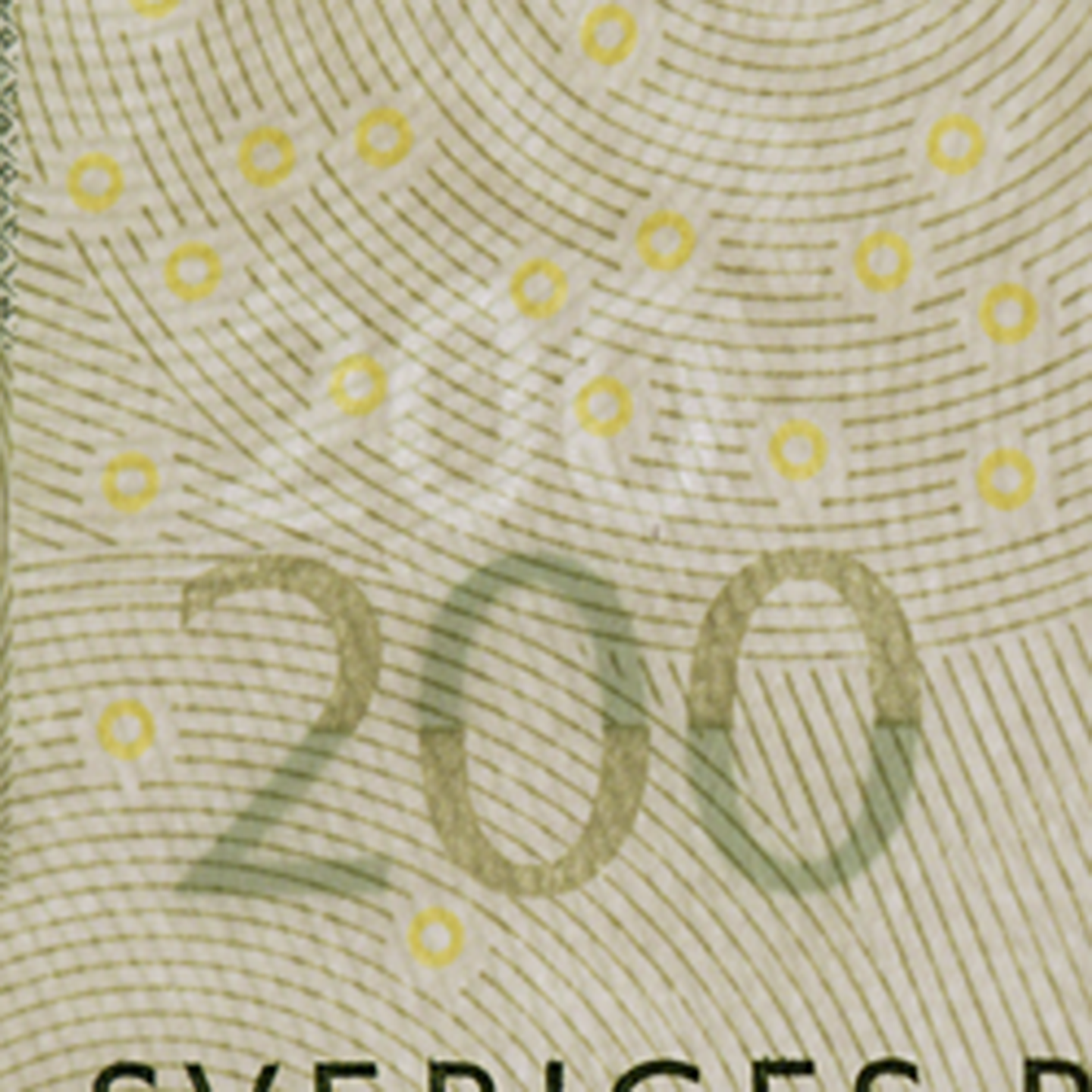
A pattern that, together with a matching pattern on the reverse, forms the denomination when you hold the banknote to the light.
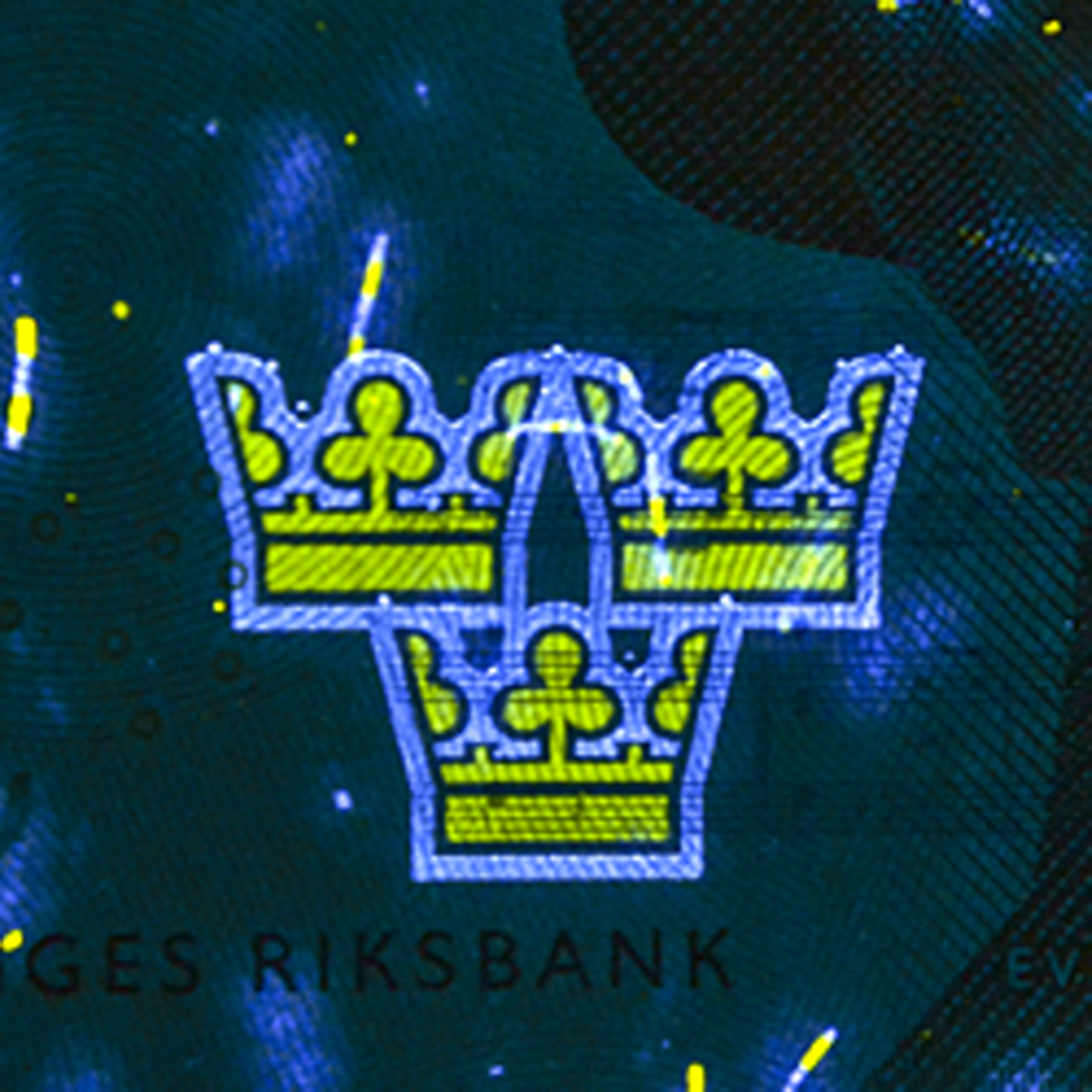
7. UV image
UV image that fluoresces (glows) yellow and blue under ultraviolet light.
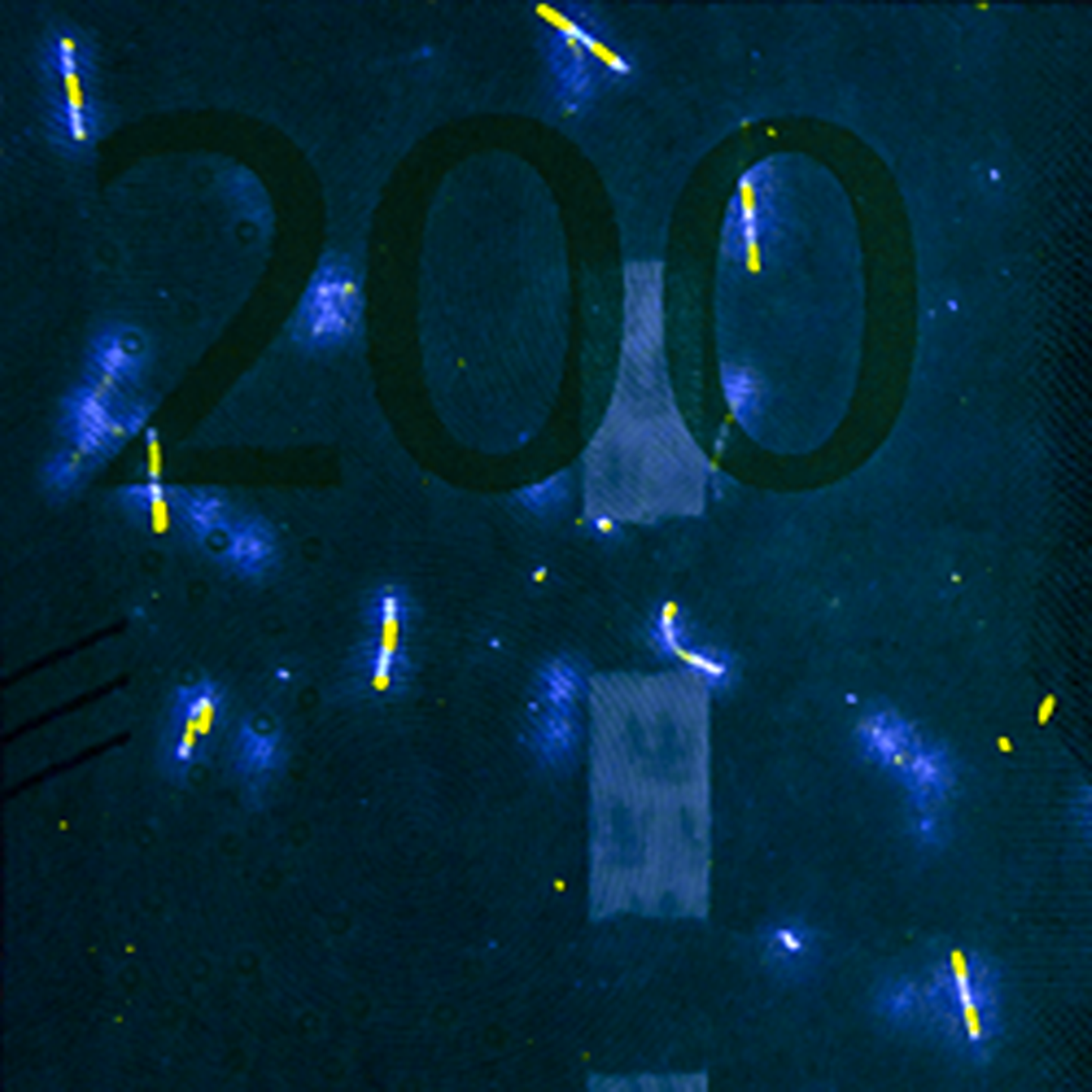
8. UV fibres
UV fibres spread across the entire banknote that fluoresce (glow) yellow and blue under ultraviolet light.
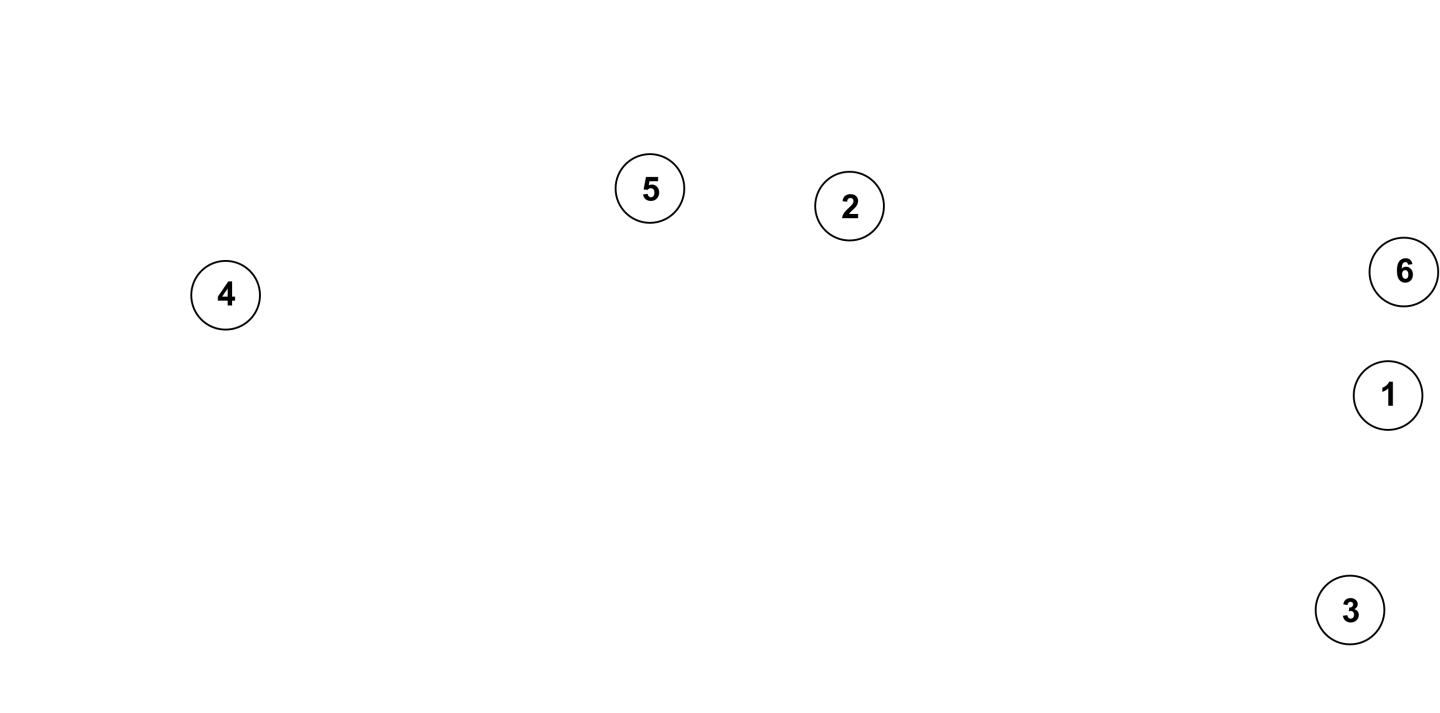
1. Watermark
Watermark with the banknote's denomination and portrait that are visible when you hold the banknote to the light. The denomination appears significantly lighter than the rest of the paper.
2. Security thread
Security thread embedded in the banknote paper. Visible as a dark line when you hold the banknote up to the light.
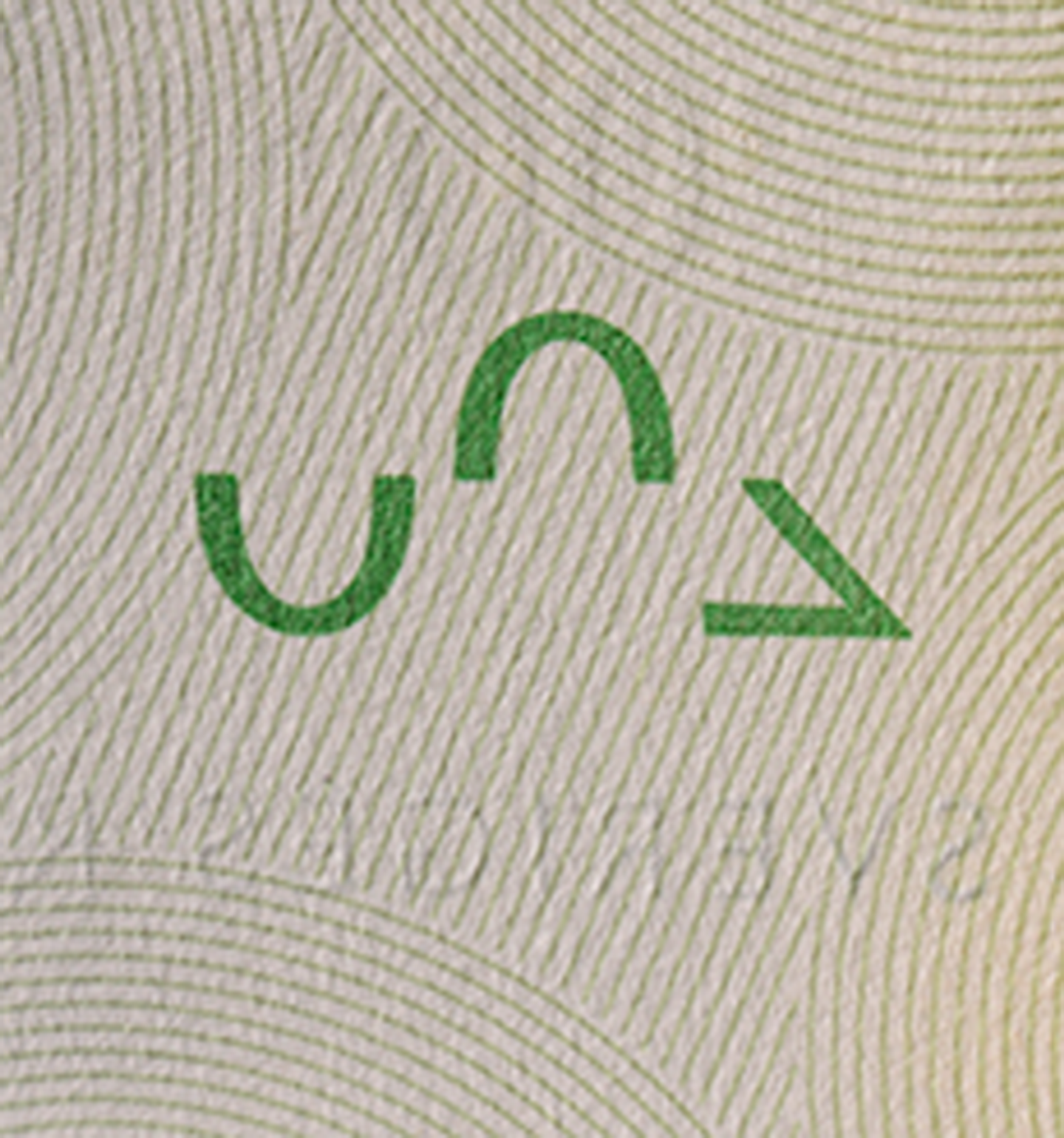
3. See-through picture
A pattern that, together with a matching pattern on the obverse, forms the denomination when you hold the banknote to the light.
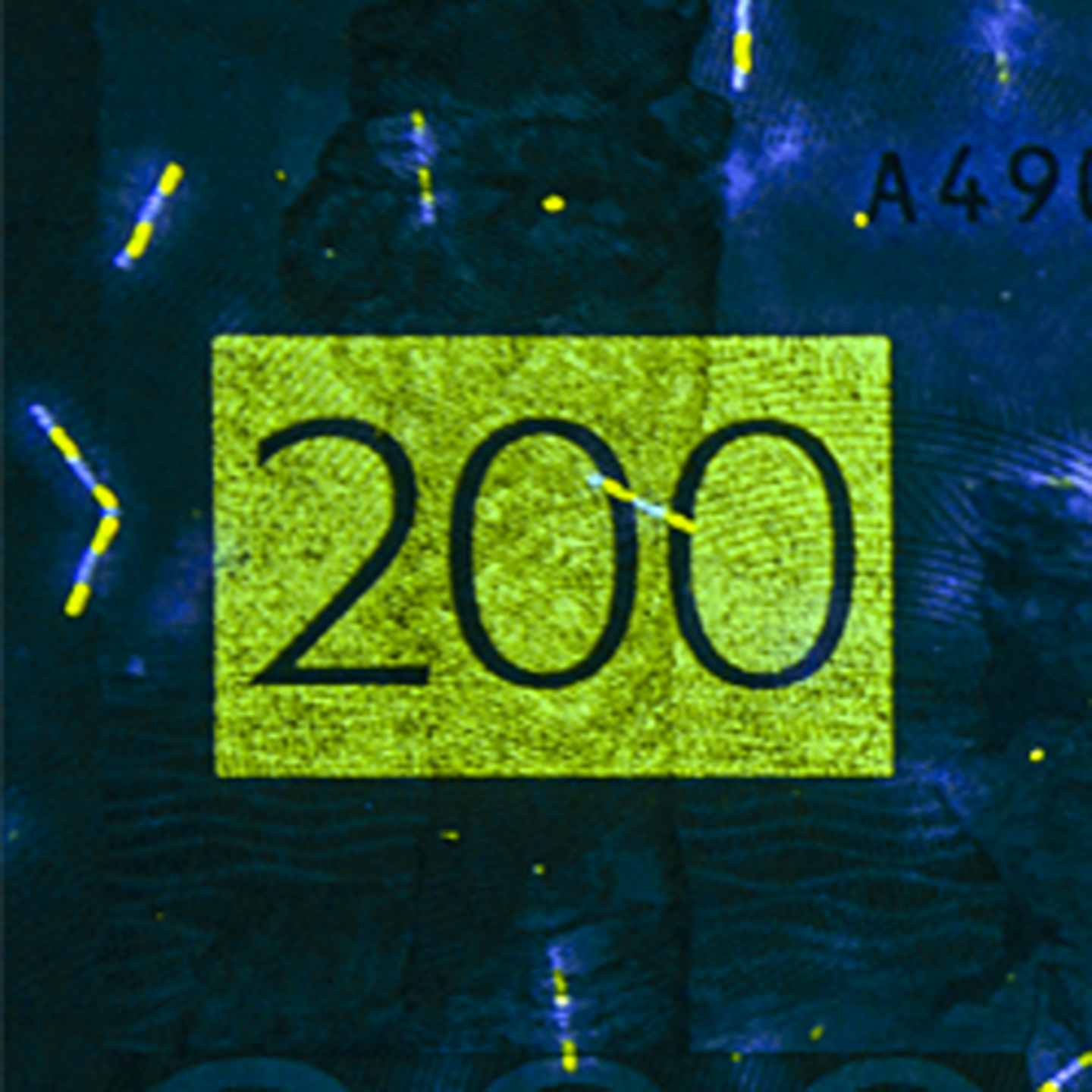
4. UV image
UV image (200) that fluoresces (glows) green under ultraviolet light.
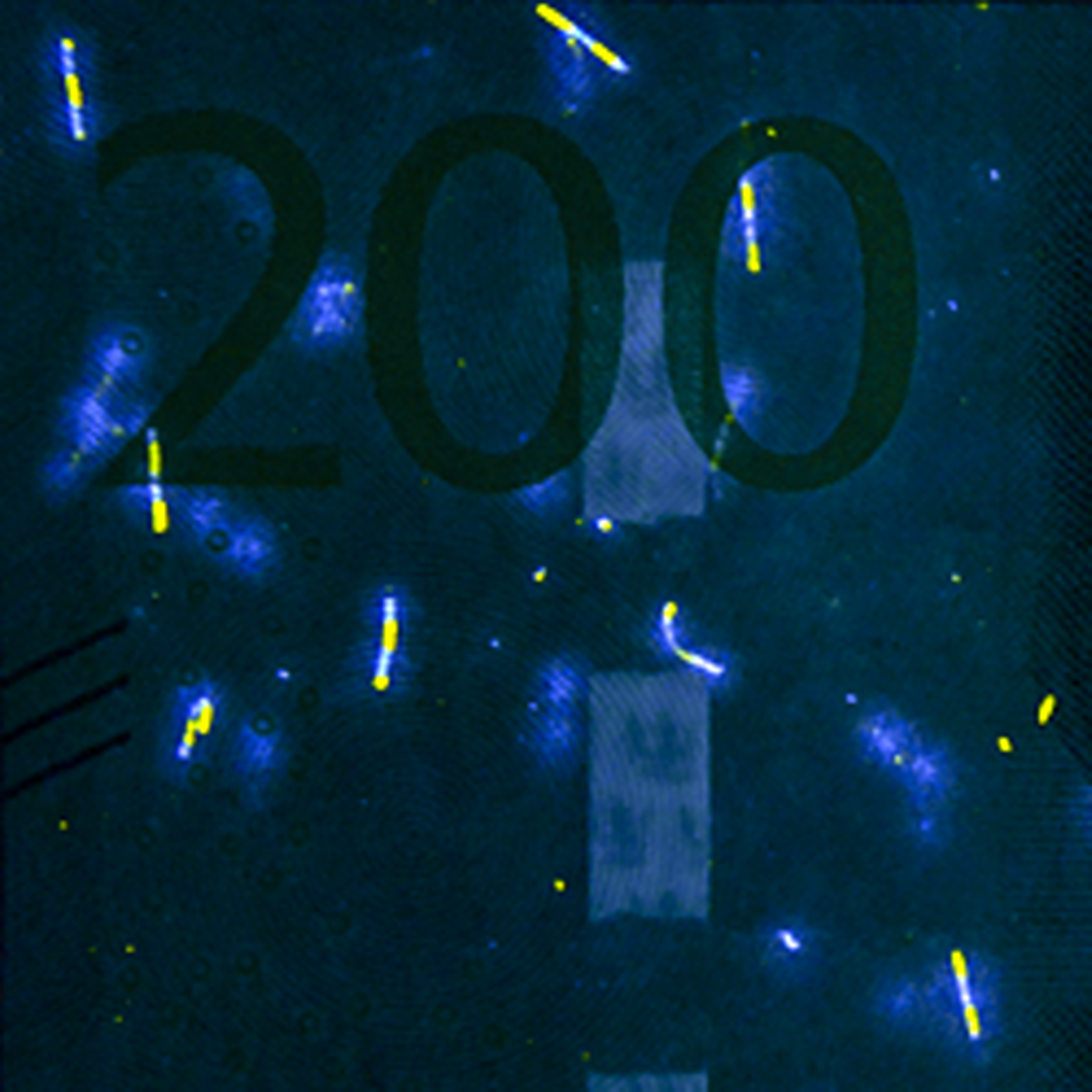
5. UV fibres
UV fibres spread across the entire banknote that fluoresce (glow) yellow and blue under ultraviolet light.
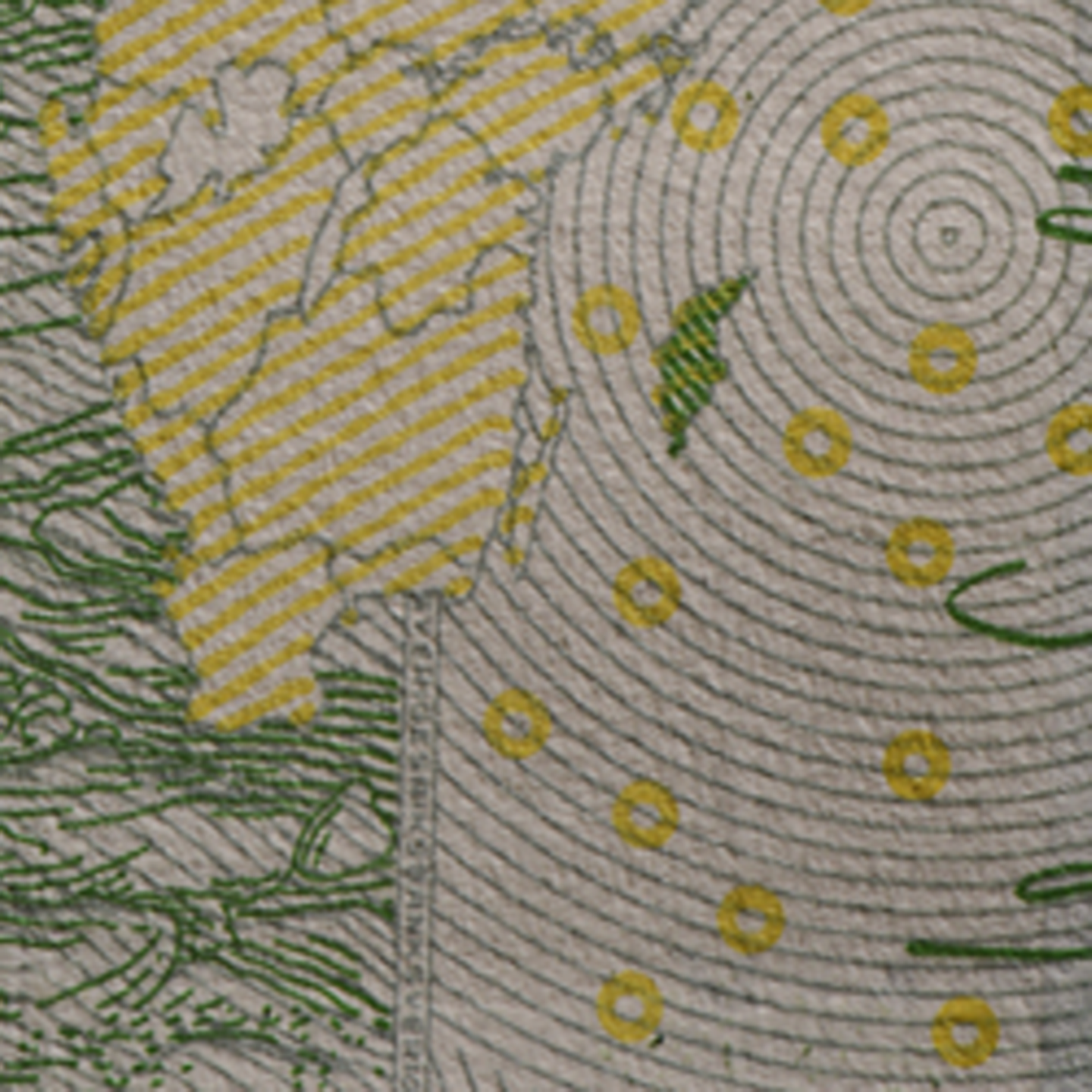
6. Minitexts
The denomination repeated several times, placed by the beach: 200200200200200200200200200200200200200200200200200 Text by the map, repeated several times: SVERIGESRIKSBANK SVERIGESRIKSBANK SVERIGESRIKSBANK Text on the short edge, repeated several times: SVERIGESRIKSBANK SVERIGESRIKSBANK SVERIGESRIKSBANK
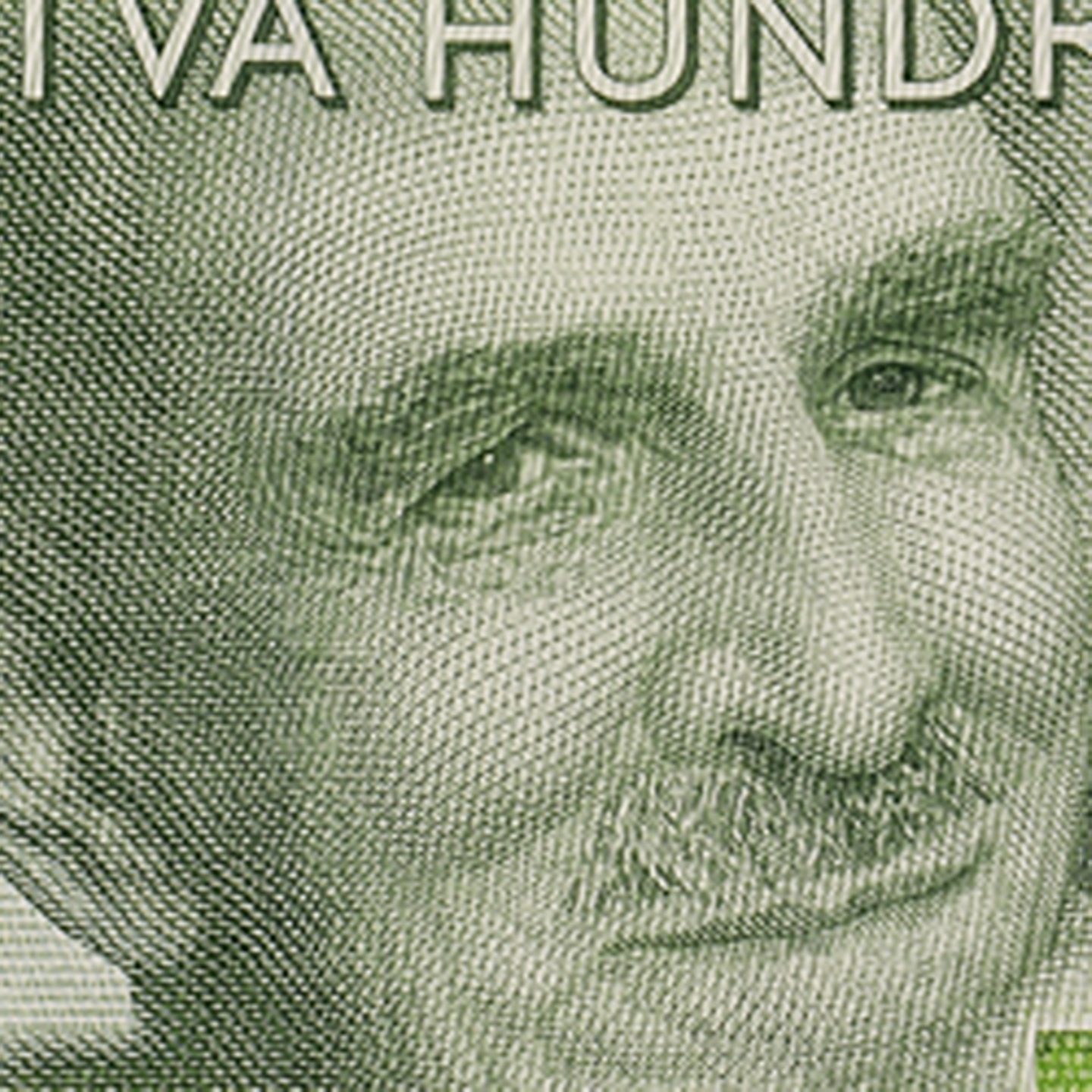
1. Ingmar Bergman
Film and theatre director Ingmar Bergman (1918–2007) is considered to be one of the foremost directors in film history. Portrait engraved after a photograph from a series of film and theatre portraits taken by the French photographer Frederick-Edwin Bertin 1998–2001.
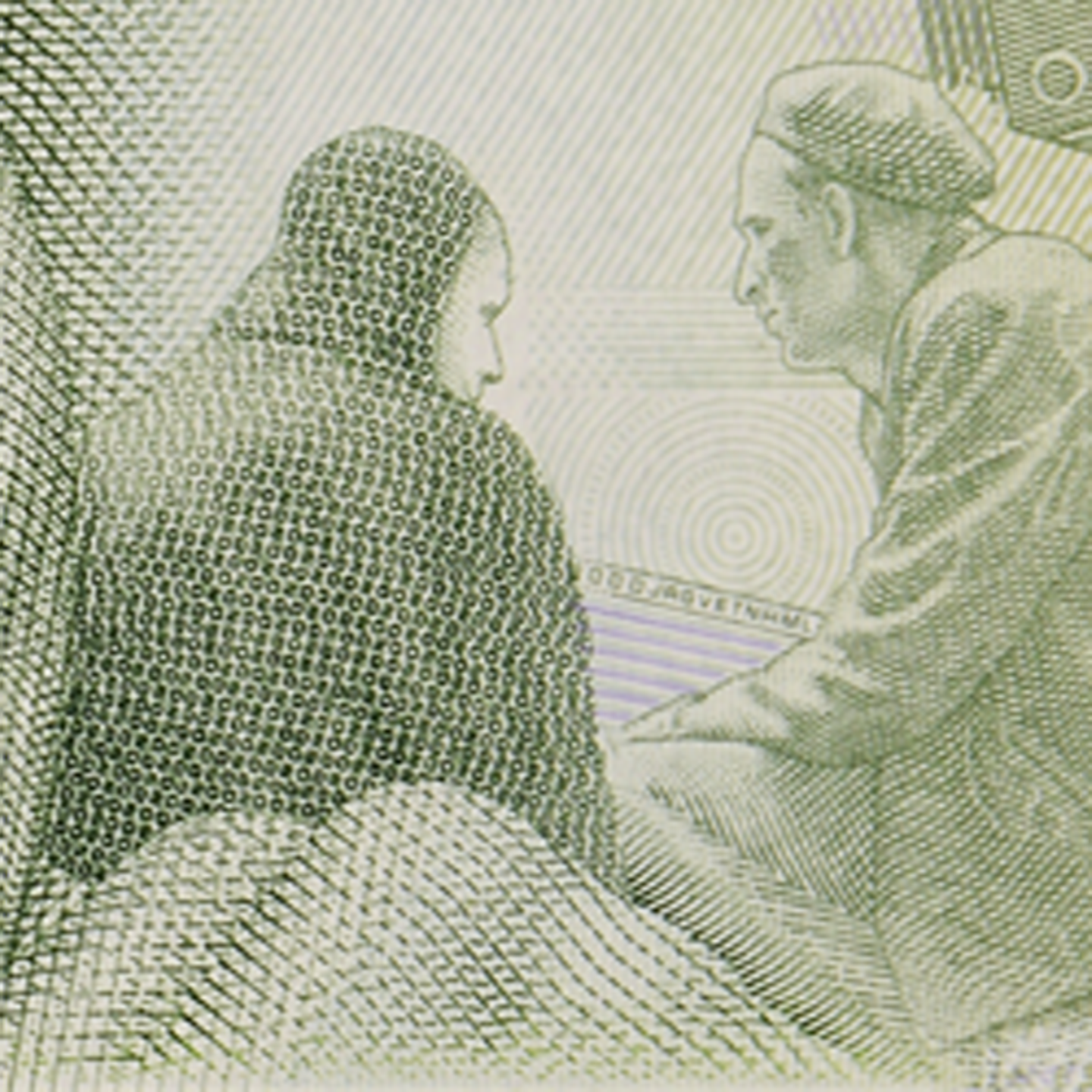
2. The Seventh Seal
Image from the making of Ingmar Bergman's film The Seventh Seal, which opened in 1957, after a photograph by Louis Huch (1896-1961), a still photographer attached to Svensk Filmindustri. The picture shows Ingmar Bergman in conversation with Bengt Ekerot in the role of Death.
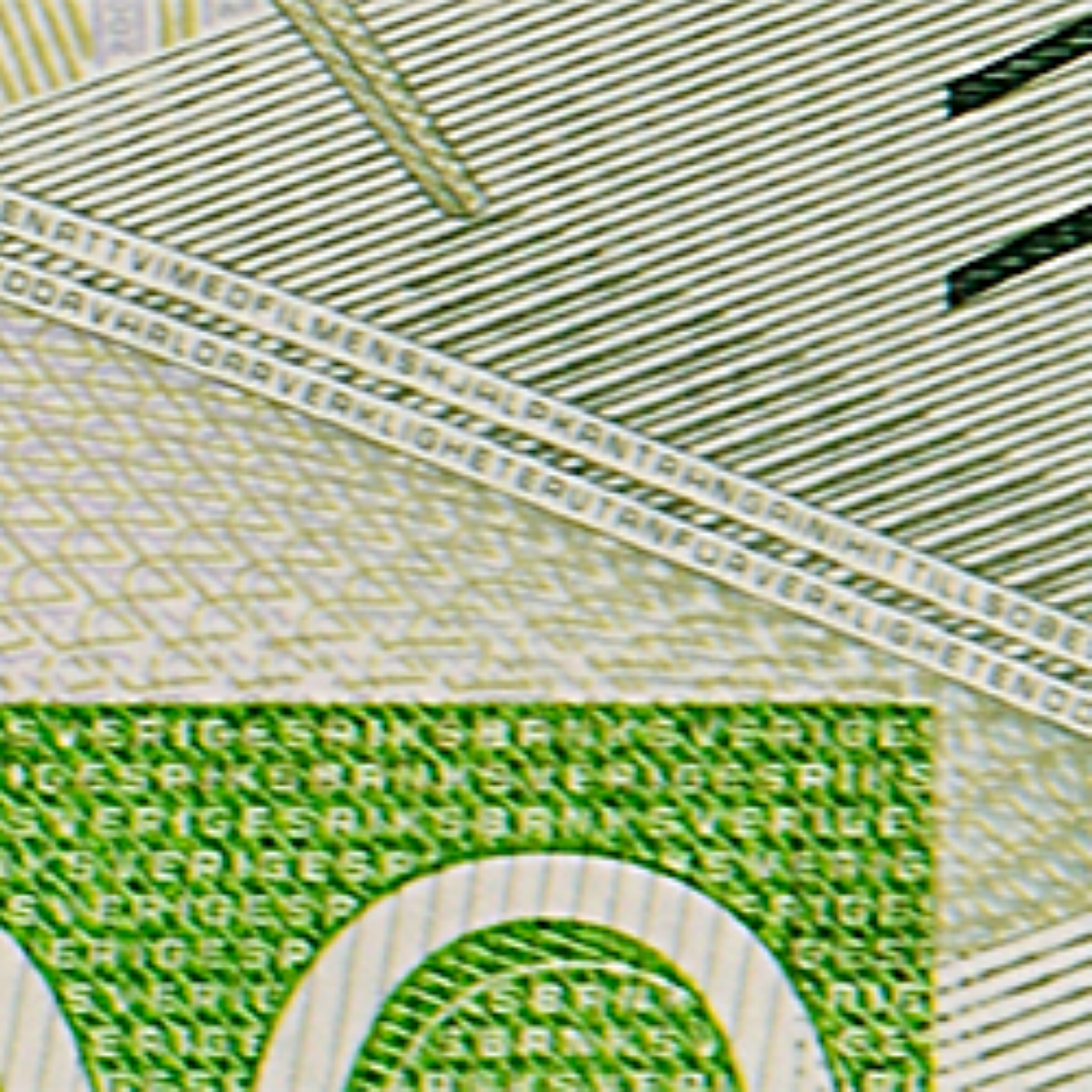
3. Realities beyond reality
Minitext that can be read with the aid of a magnifying glass (quotation by Ingmar Bergman, in translation: I know, of course, that by using film we can bring in other previously unknown worlds, realities beyond reality.): Jag vet nämligen att vi med filmens hjälp kan tränga in i hittills obesedda världar, verkligheter utanför verkligheten.
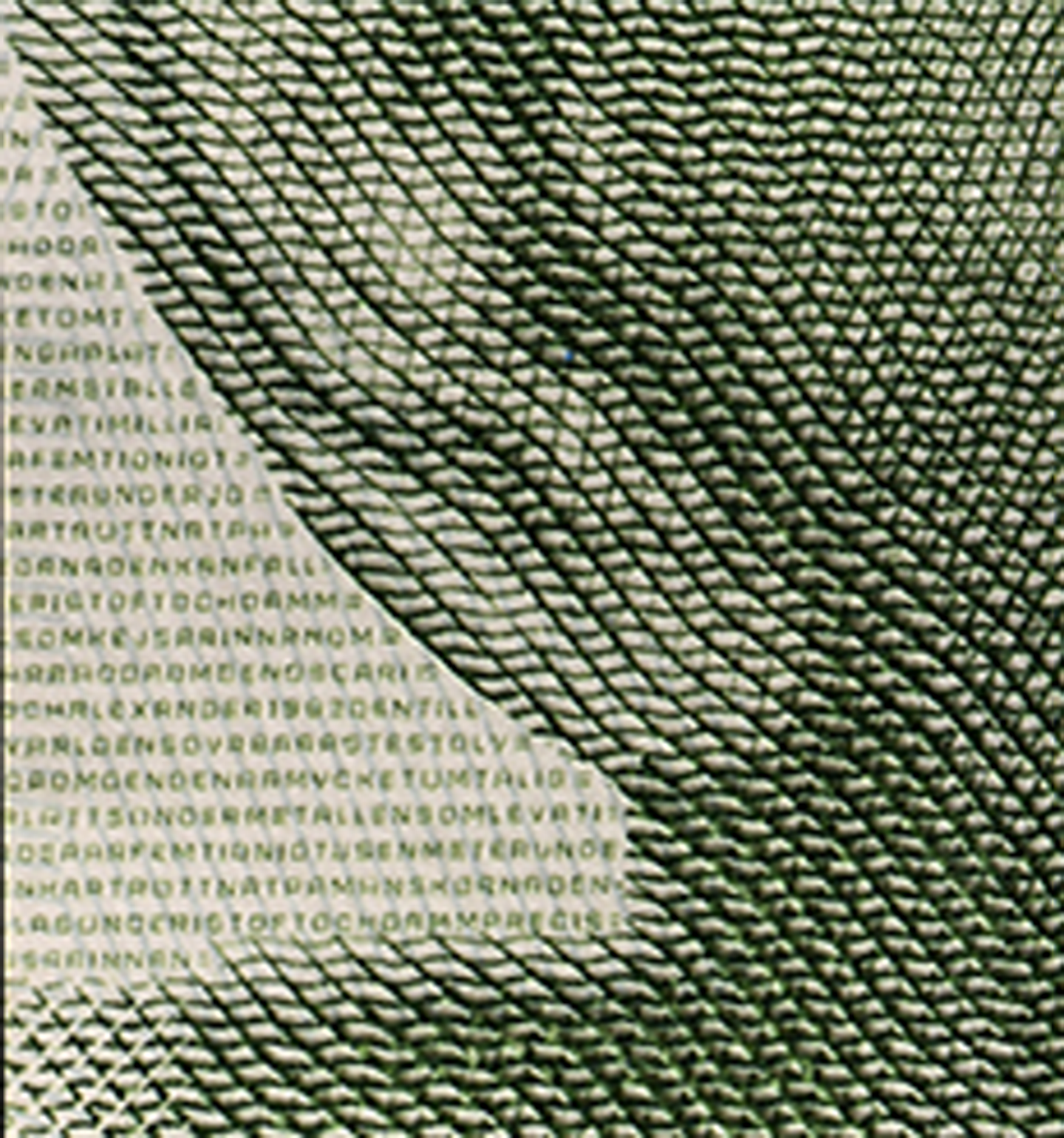
4. Fanny and Alexander
Microtext that can be read with the aid of a magnifying glass (in translation: The most precious chair in the world belongs to you. Take care of it, for it's very fragile. It might easily fall to pieces. This metal, which has existed for billions of years, fifty-nine thousand metres under the earth, has tired of people. It could turn into powder and dust just like the empress if you don't take care of it. Oscar in Fanny and Alexander, 1983): Den tillhör er, världens dyrbaraste stol, var rädda om den. Den är mycket ömtålig, den går lätt sönder, metallen som levat i milliarder år, femtioniotusen meter under jorden har tröttnat på mänskorna, den kan falla sönder i stoft och damm precis som kejsarinnan om ni inte är rädda om den. Oscar i Fanny och Alexander 1983.
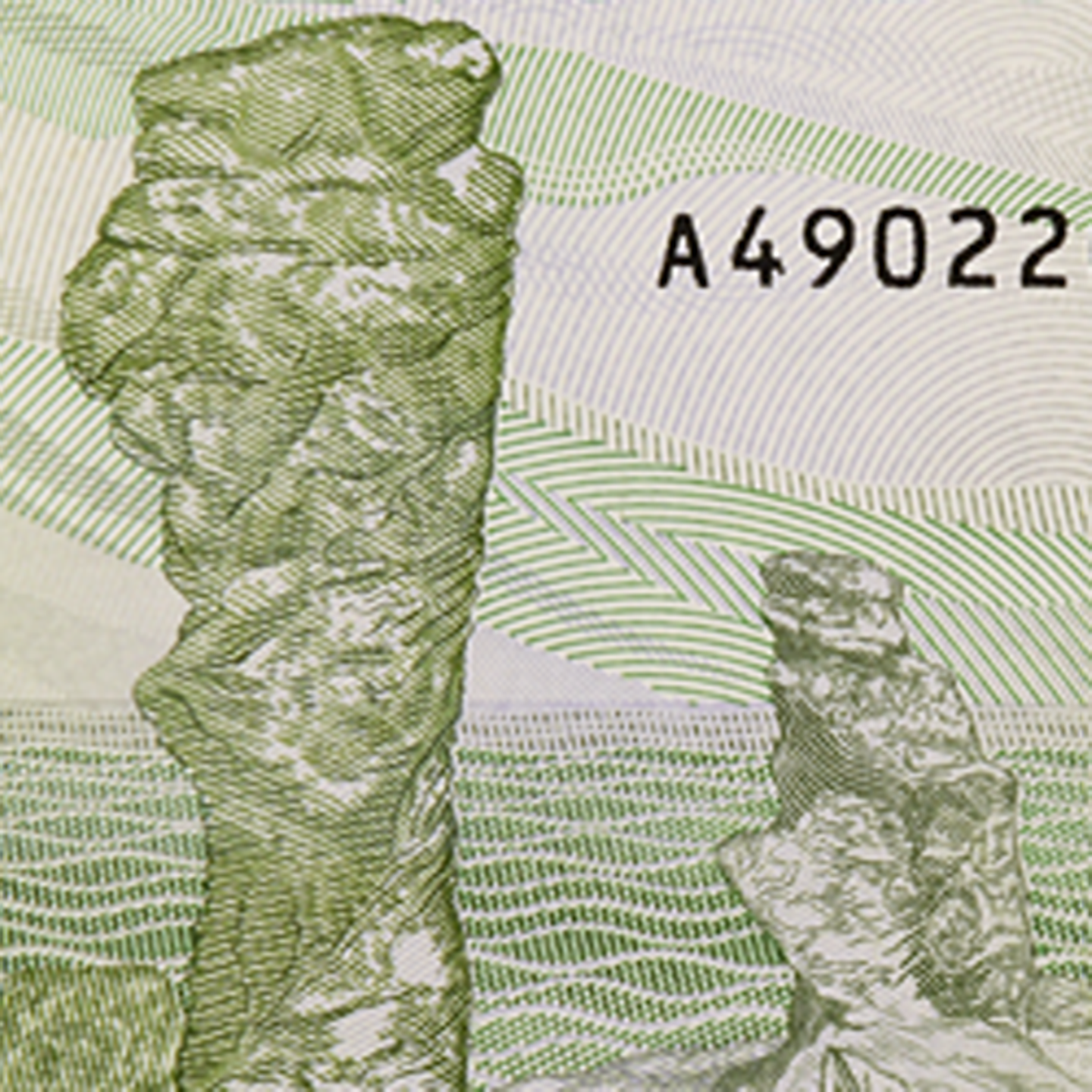
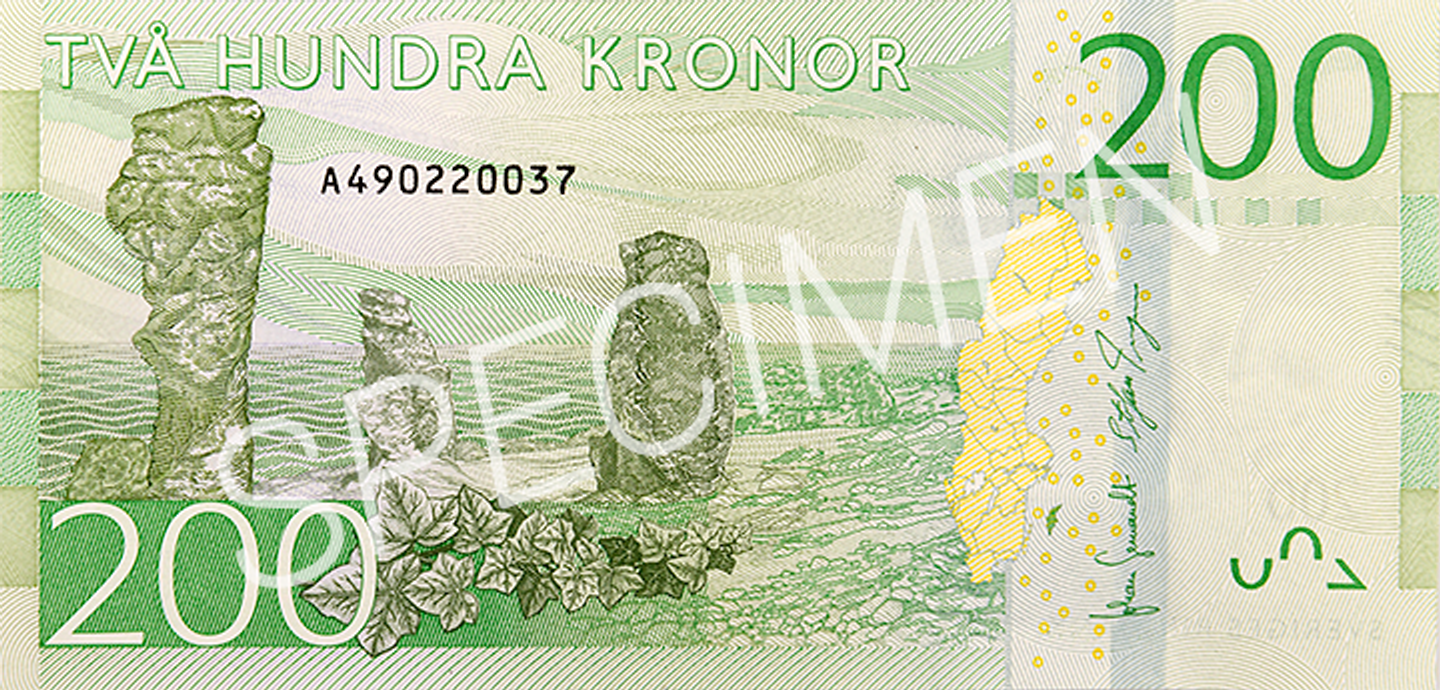
1. Limestone stacks
Limestone stacks at Langhammar nature reserve, Fårö (Gotland).
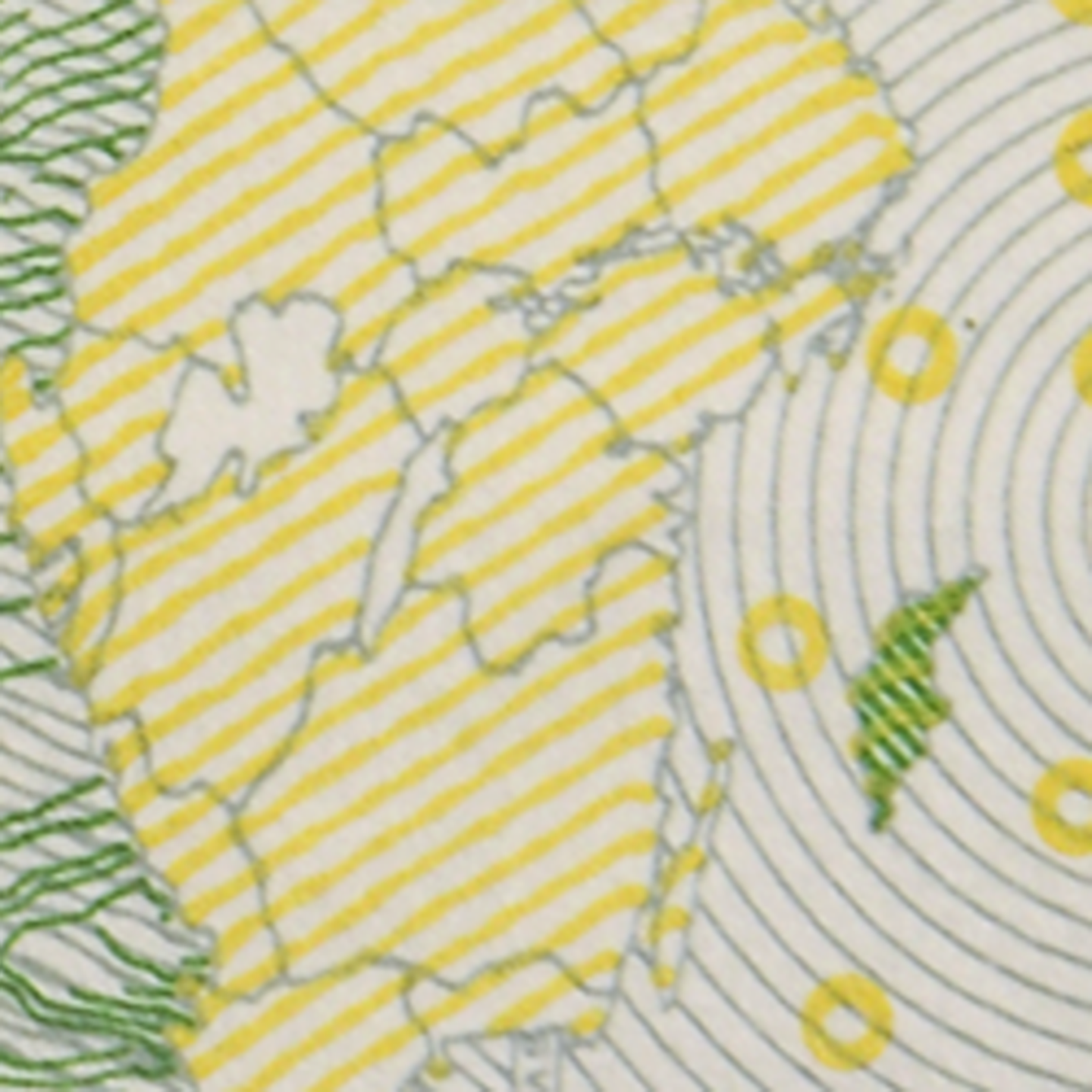
2. Ingmar Bergman’s Gotland
Map of Sweden with the province of Gotland marked. Ingmar Bergman lived on the island of Fårö (Gotland) for over forty years and made many of his greatest films there.
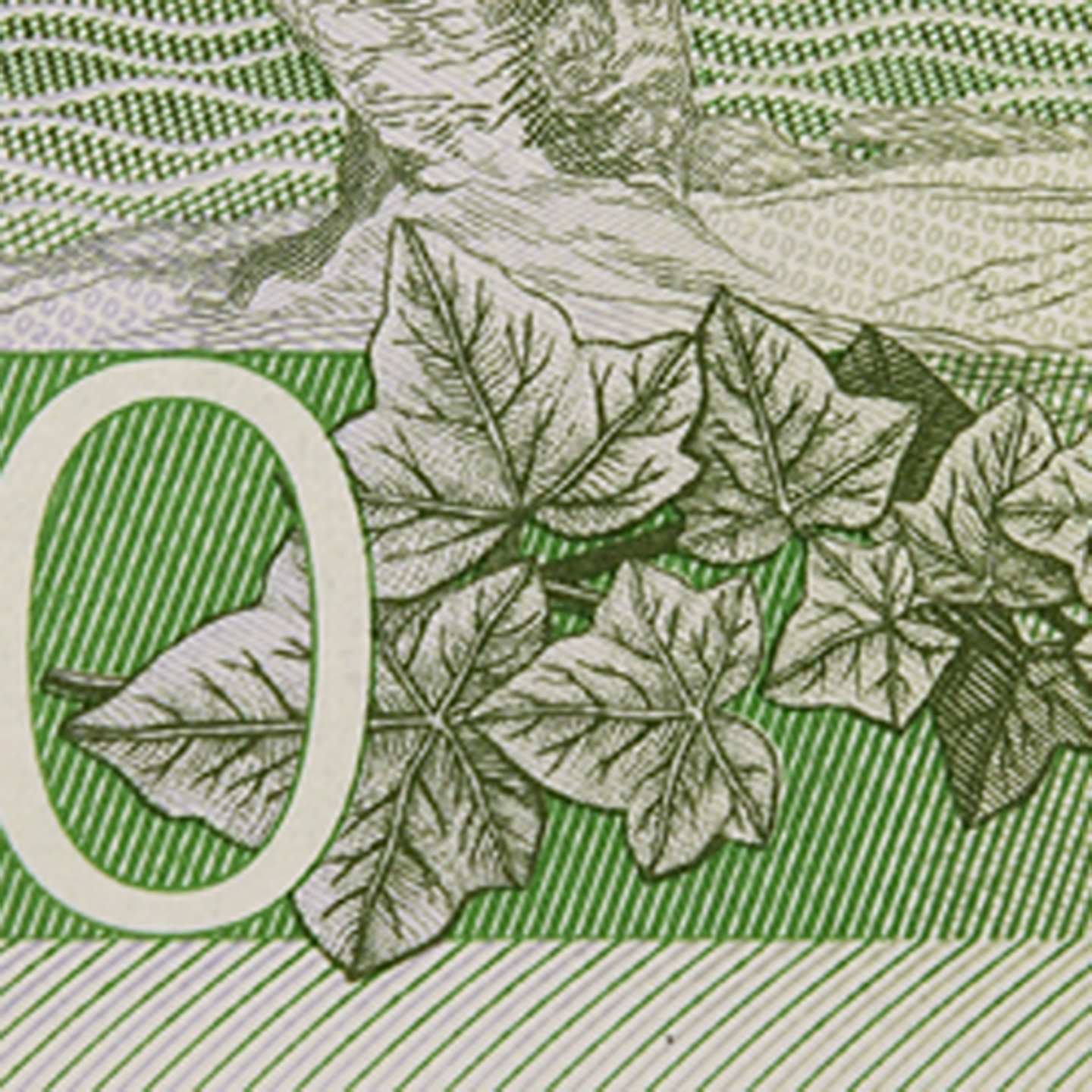
3. Ivy
The provincial flower of Gotland, the ivy.
Facts 200-krona banknote
Obverse motif: Film director Ingmar Bergman
Reverse motif: Gotland (Fårö), where Ingmar Bergman had his home
Measures: 140 x 66 millimetres
Thickness: 125 micrometres +/- 10%
Colour: Green
Will be introduced: 2015
Banknote paper: Manufactured of cotton fibres that are not fluorescent, which is to say they do not emit any light under ultraviolet light (other types of paper may emit a bluish glow).
Banknote numbers: The letters indicate the year in which the banknote was printed. A = 2013, B = 2014 etc. The two first digits indicate where on the printing sheet the banknote was printed. The final seven digits are a serial number.
Valid from 1 October 2015.