
Göran Hjelm: Signs of stronger economic activity, but the risks of inflation being too high remain
Presentation “We have a challenging period ahead of us with regard to monetary policy. We need to test our way forward and carefully analyse what effect the current policy rate and policy-rate path essentially have on the development of the economy.” These comments were made by Deputy Governor Göran Hjelm, describing his views on the most recent policy rate decision at Handelsbanken in Stockholm.
Date: 26/08/2026 08:00
Speaker: Deputy Governor Göran Hjelm
Place: Handelsbanken, Stockholm
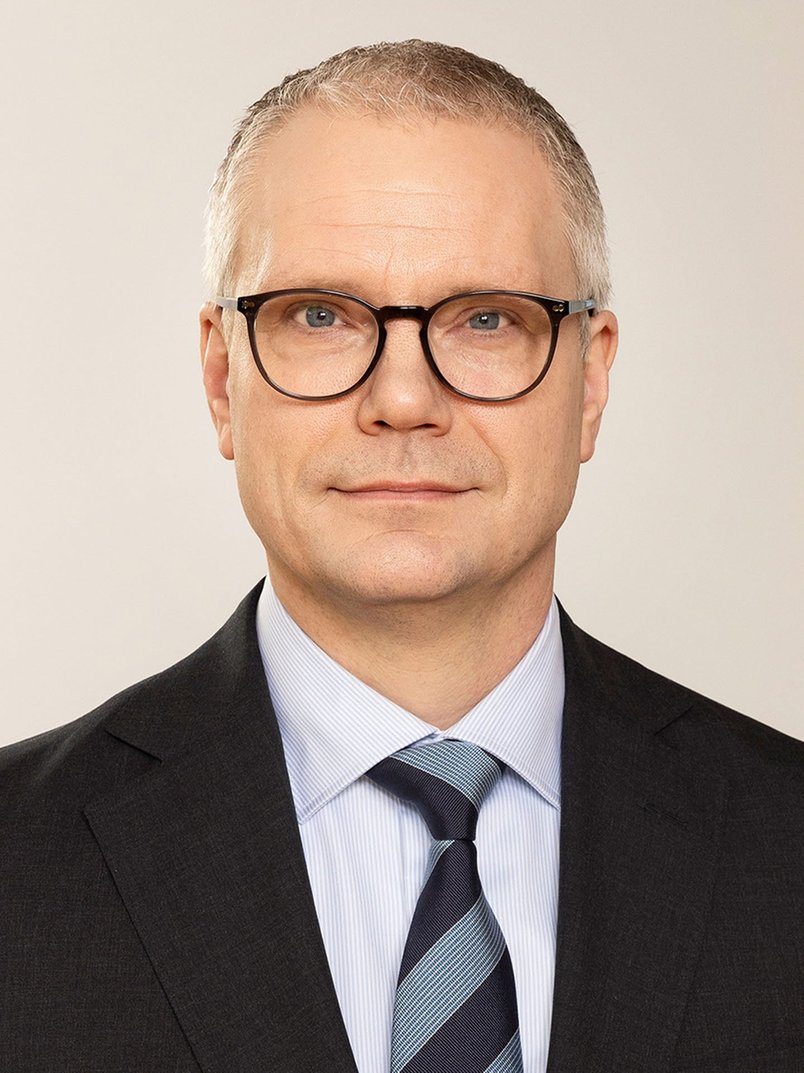
Göran Hjelm, deputy governor.
The war in the Middle East has had less of an impact than many feared last spring. “However, the conflict appears to be a long way from a sustainable solution, and the risk of an escalation with significant implications for production and supply has increased compared with the time of our decision in June, when the Memorandum of Understanding between the parties had just been signed,” said Mr Hjelm.
The Swedish economy has continued to strengthen. Resource utilisation is approaching normal levels, and indicators suggest that economic activity is likely to strengthen further in the coming period. “At the same time, there is still spare capacity in the labour market. There is therefore scope for a further improvement in resource utilisation without this leading to excessively high demand-driven inflation, as the labour market responds to continued growth in demand for goods and services.”
The picture of inflation has been multifaceted of late, commented Mr Hjelm. Although inflation has turned out to be higher than the Riksbank’s forecast, several forward-looking indicators have slowed down. “Over the past three months, inflation has risen considerably more than usual. However, the lion’s share of this is due to unusually sharp price rises on travel-related services, which are expected to ease in the coming months. However, I do not think we should completely disregard these figures, not least because I believe they are, to some extent, due to indirect effects of rising energy prices. The important thing is to form a view of what the latest price trends might indicate regarding inflationary pressures going forward.”
“My – albeit uncertain – assessment is that the current policy rate level is slightly expansionary and that there is scope to continue supporting the economy without demand leading to overly high inflation. However, the risk of an escalation of the war, resulting in substantial price increases, justifies a probability of a rate increase over the year," said Mr Hjelm.
When asked about the significance of the interest rate differentials between the ECB and the Riksbank, Mr Hjelm said: “Differences that are justified on the basis of relative macroeconomic conditions do not typically have any dramatic effects on either exchange rates or inflation. The ECB’s monetary policy is an important prerequisite for, but not a measure of, what constitutes an appropriate Swedish policy rate.”